
Although many homeowners desire open-concept basements, it might be difficult to remove or modify a load-bearing wall. Structural walls must adhere to stringent safety and building code requirements in order to support the weight of the house above. Projects involving modifications to the structure in basements in South Jordan need the right engineering, permits, and inspections.
Homeowners can prevent costly mistakes, structural damage, and code violations by being aware of load-bearing wall requirements for basement remodeling. It is crucial to understand local construction standards and laws, as well as how they impact your project, before making any adjustments.
What Is A Load-Bearing Wall In A Basement?
Understanding how walls function is crucial for remodeling, but first, it’s important to for basement load bearing wall identification.
A wall that supports the weight of the structure above it is known as a load-bearing wall. This covers roof systems, higher levels, and occasionally even large amounts of furniture. These walls are an essential component of the home’s structural support system in basement remodeling projects.
How Basement Walls Support Upper Floors?
The process goes like this:
- Beams or walls support floor joists
- Beams support walls by transferring the weight
- Support walls help the foundation support its weight
This basement structural support means that changing one wall can have an impact on the system as a whole.
Load-Bearing Vs Non-Load-Bearing Walls
Load-Bearing Walls:
- Provide weight support from above
- Frequently run perpendicular to the floor joists
- It could be situated right over the foundation footings
Non-Load-Bearing Walls:
- Only divide rooms
- Does not support structural weight
- Easier to move or remove
For basement remodeling, accurate identification is essential for the load-bearing wall requirements.
Why Load-Bearing Wall Requirements Matter?
Following load-bearing wall requirements for basement remodeling is essential for stability, safety, and legal compliance.
Preventing Structural Failure
A load-bearing wall’s removal or weakening may result in:
- Sagging flooring
- Drywall cracks
- Misalignment of windows and doors
- In extreme circumstances, structural collapse
These issues may arise gradually and become costly to fix.
Maintaining Home Safety
For homes to remain stable, certain structural safety requirements are necessary.
Safety measures often include:
- Reinforced beams
- Structural calculations
- Temporary support framing
Complying With Building Codes
There are local basement renovation standards in place to guarantee safe building methods.
Ignoring these rules may lead to:
- Failed inspections
- Fines
- Remodeling project’s delays
Homeowners can prevent these issues by being aware of the load-bearing wall requirements for basement remodeling.
South Jordan Building Code Requirements
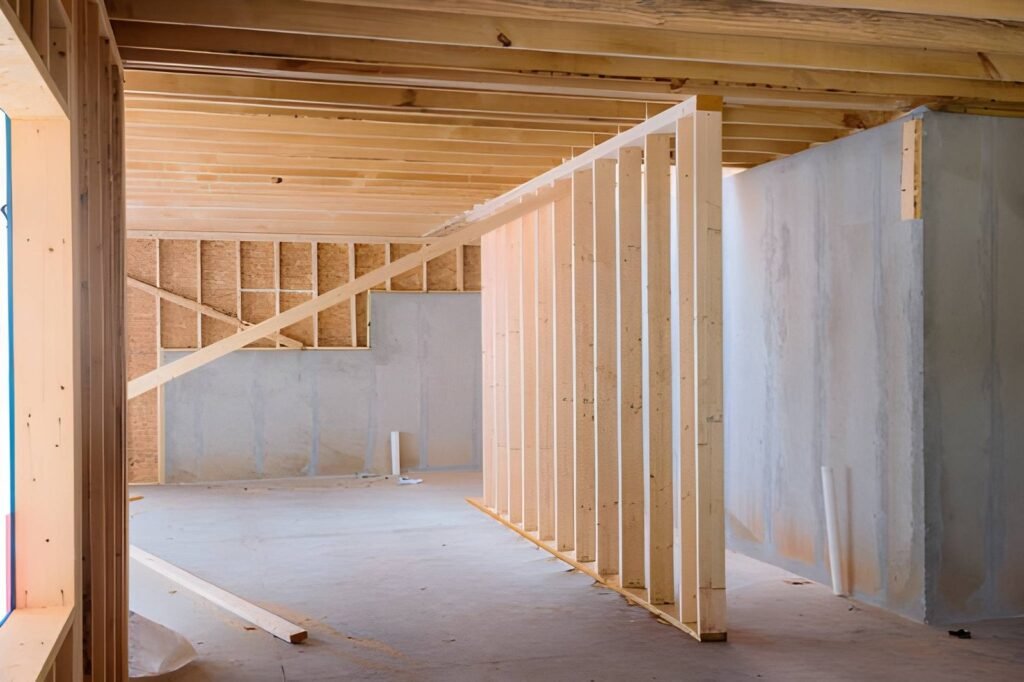
Projects involving basement structural changes must adhere to the South Jordan building code.
These rules guarantee that all work complies with Utah construction standards and safety requirements.
Structural Changes Permit Requirements
You need a basement remodeling permit if you:
- Take down a load-bearing wall
- Put in structural beams
- Adjust the floor supports
- Change the foundational components
Permits help local authorities confirm that the renovations adhere to Utah building regulations and load-bearing wall requirements for basement remodeling.
Remodeling Inspections
Several inspections are necessary for most structural remodeling projects, including:
- Final building inspection
- Framing inspection
- Structural support verification
These inspections verify that the work satisfies the load-bearing wall requirements for basement remodeling and adheres to the authorized plans.
When Engineer Approval Is Needed
Structural changes frequently need professional engineering approval.
An engineer might be needed in the following situations:
- Taking down substantial portions of a load-bearing wall
- Putting up new beams
- Changing the foundation’s supports
These procedures guarantee that it complies with load-bearing wall requirements for basement remodeling.
When Can You Remove Or Modify A Load-Bearing Wall?
A load-bearing wall can be removed, but only if the wall’s purpose is replaced by appropriate support systems.
Most projects require the installation of structural posts and beams.
Installing Support Beams
Basement support beam installation is a typical solution. The weight that the wall originally supported is carried by beams.
Common materials for beams include:
- Glulam beams
- Laminated veneer lumber (LVL)
- Steel beams
To support structural loads, these beams need to be appropriately sized.
Adding Posts Or Columns
Vertical posts or columns are frequently needed for support beams in order to transfer the weight to the foundation.
It is possible to install posts:
- At the ends of beams
- At specific spacing intervals
- On reinforced footings
Structural Calculations
Every beam and support system has to adhere to the engineered beam requirements.
Structural engineers calculate:
- Beam size and material
- Load distribution
- Post placement
These computations are essential to the load-bearing wall requirements for basement remodeling.
Common Mistakes Homeowners Make
Mistakes might result in expensive repairs and safety basement remodeling risks.
Here are some common mistakes made when remodeling a structure.
1. Assuming Non-Load-Bearing Interior Walls
A common misconception among homeowners is that basement walls are merely dividers.
Interior basement walls, however, frequently support:
- Central beams
- Main floor joists
- Stair structures
Making incorrect assumptions can put basement remodeling at considerable risk.
2. Skipping Permits
Some homeowners attempt to save money on permits.
This may lead to:
- Failed home inspections when selling
- Problems with insurance
- City penalties
Permits guarantee that the project meets the load-bearing wall requirements for basement remodeling.
3. DIY Structural Modifications
Professional planning is required for structural work.
Do-it-yourself modifications may result in:
- Improper beam installation
- Structural damage over time
- Weak support systems
Remodeling safely requires professional expertise.
The Role Of A Structural Engineer In Basement Remodeling
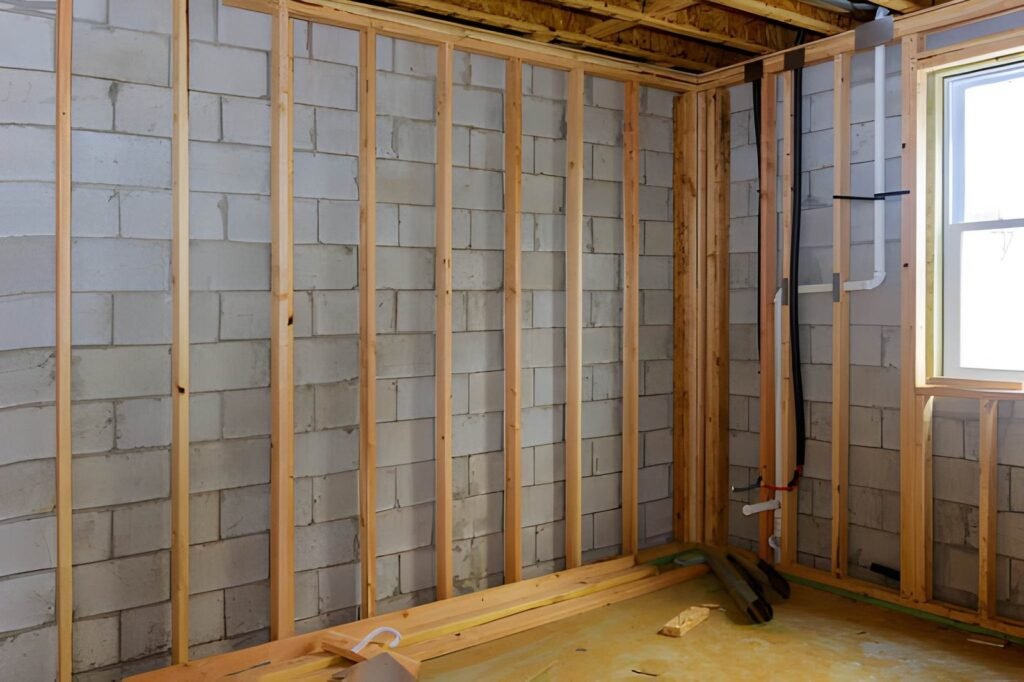
A structural engineer’s inspection of the basement remodeling guarantees that safe building procedures are followed.
Engineers inspect the movement of structural loads within the house, helping load-bearing wall requirements for basement remodeling.
Load Calculations
The weight is determined by engineers using:
- Live loads (furniture, people)
- Roof structures
- Upper floors
- Wall loads
These computations estimate the amount of support required after wall removal.
Beam Sizing
Beam size is determined by:
- Material strength
- Span length
- Structural load
For basement remodeling, proper beam design is necessary in order to meet the load-bearing wall requirements for basement remodeling.
Permit Documentation
Engineers frequently provide:
- Beam specifications
- Load calculations
- Structural drawings
Permit applications are filed with this engineering approval.
Cost Factors For Load-Bearing Wall Modifications
In terms of expenses, the load-bearing wall requirements for basement remodeling vary based on a number of factors.
Beam Material
The total cost is influenced by different beam materials:
Steel beams:
- More sturdy for extended spans
- Higher material cost
- Heavy equipment might be needed to install
LVL beams:
- Easier to install
- More affordable
- Ideal for many types of home projects
Labor Complexity
Labor costs are determined by:
- Beam size
- Structural reinforcement required
- Temporary support framing
Complex structural projects need workers with higher levels of ability.
Permit And Inspection Fees
Cities impose charges for:
- Building permits
- Inspection visits
- Structural plan reviews
These fees are part of complying with load-bearing wall requirements for basement remodeling.
Why Professional Basement Contractors Matter?
Remodeling can be made safer and more compliant by hiring experienced contractors. Expert basement remodeling are knowledgeable about local codes as well as construction methods.
Code Compliance
A professional basement contractor South Jordan like CCS of Utah is aware of:
- Inspection standards
- Local permit processes
- Structural framing requirements
This helps in preventing violations and delays.
Proper Inspections
Professional contractors plan inspections for the appropriate phases of construction. This guarantees the project complies with Utah building regulations.
Safe Beam Installation
Installing beams properly calls for: ·
- Accurate beam placement
- Secure post connections
- Temporary structural support
These actions satisfy the load-bearing wall requirements for basement remodeling and guarantee structural stability throughout time.
Long-Term Structural Safety
Your property will be protected for many years if you adhere to load-bearing wall requirements for basement remodeling.
A well-built structure prevents:
- Expensive repairs later
- Sagging floors
- Structural shifting
FAQs
How do I know if a basement wall is load-bearing?
Load-bearing walls typically run perpendicular to floor joists and align with walls above or below. A structural inspection or contractor assessment is the only reliable way to confirm. Guessing based on appearance alone can lead to costly mistakes.
Can a load-bearing wall be removed during basement remodeling?
Yes, load-bearing walls can be removed during a remodel. This requires proper structural support, such as a beam or column, plus permits. Skipping these steps risks serious damage to your home.
Do I need a permit to remove a load-bearing wall in South Jordan?
Absolutely, South Jordan requires permits for structural changes like this. Inspections are also required to verify the work meets code. This protects your home’s safety and resale value.
What happens if I remove a load-bearing wall without support?
Removing it without support can cause sagging floors or cracked walls. In severe cases, it may lead to structural collapse. This creates serious safety hazards for everyone in the home.
Does Utah require an engineer for load-bearing wall removal?
In most cases, yes, engineered plans are required for approval. A structural engineer designs the proper support system for the opening. This ensures the remodel meets Utah building code requirements.
“Planning structural changes in your basement? Speak with a South Jordan basement remodeling expert to ensure your project meets all safety and code requirements.”