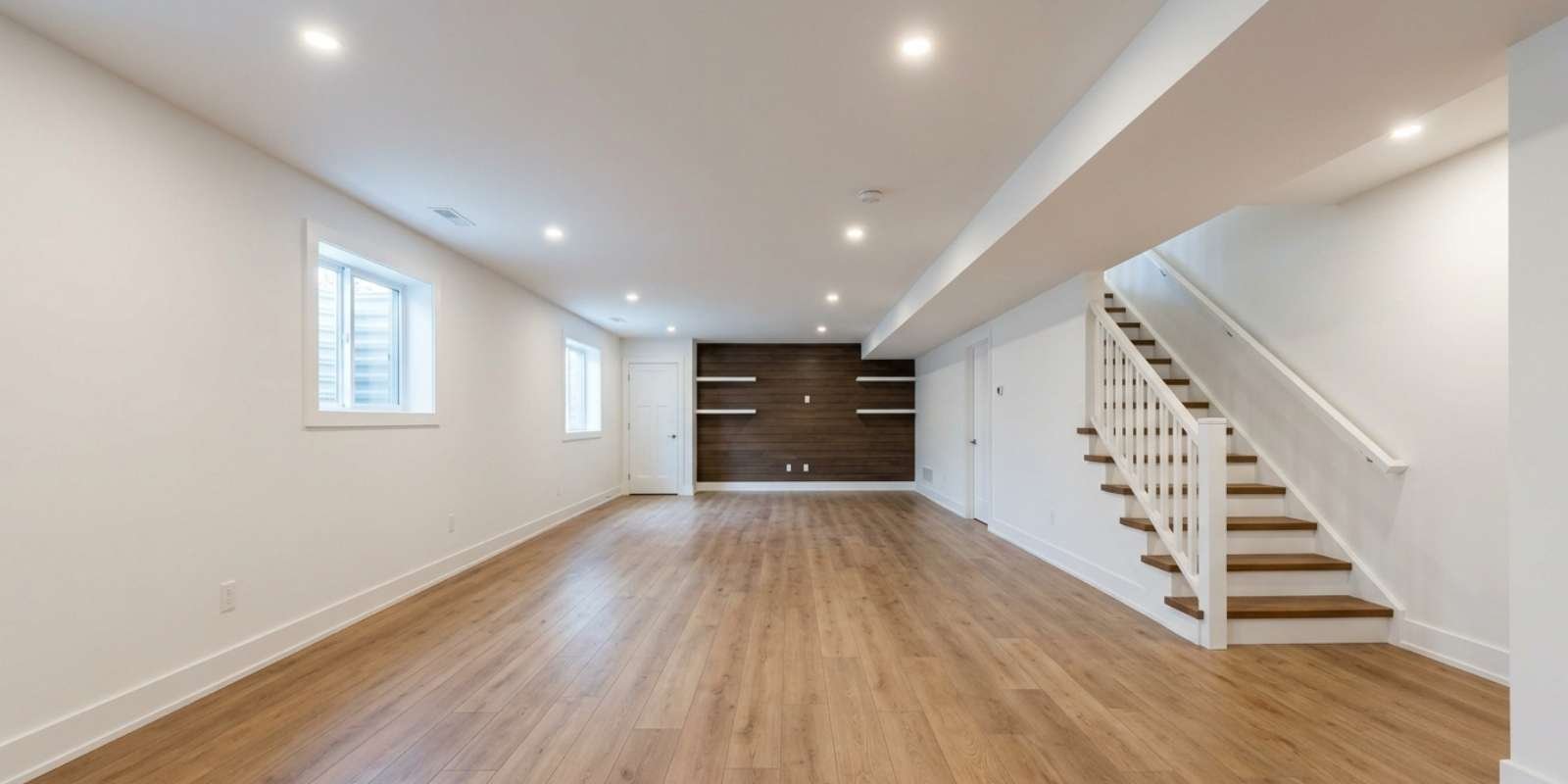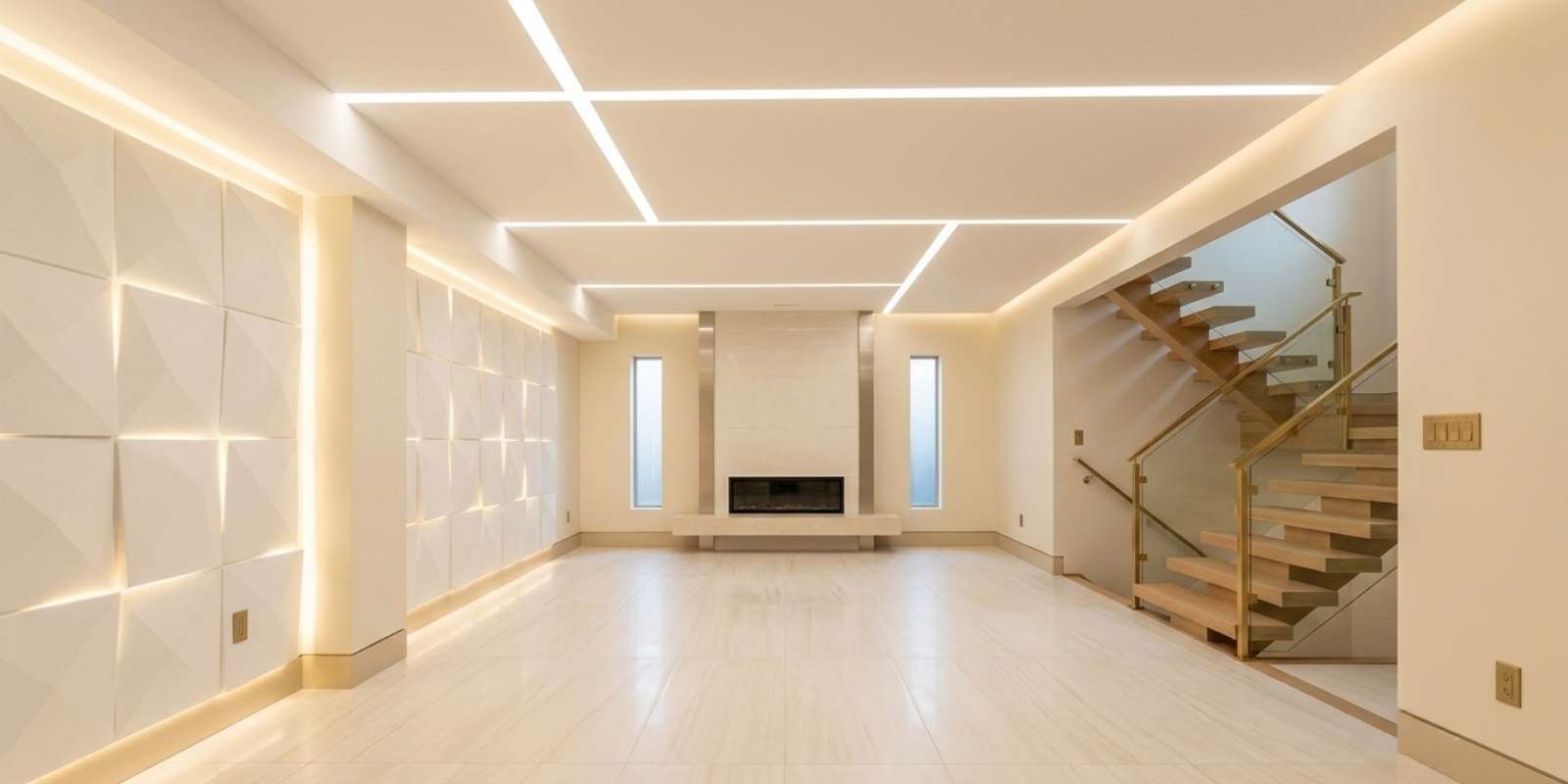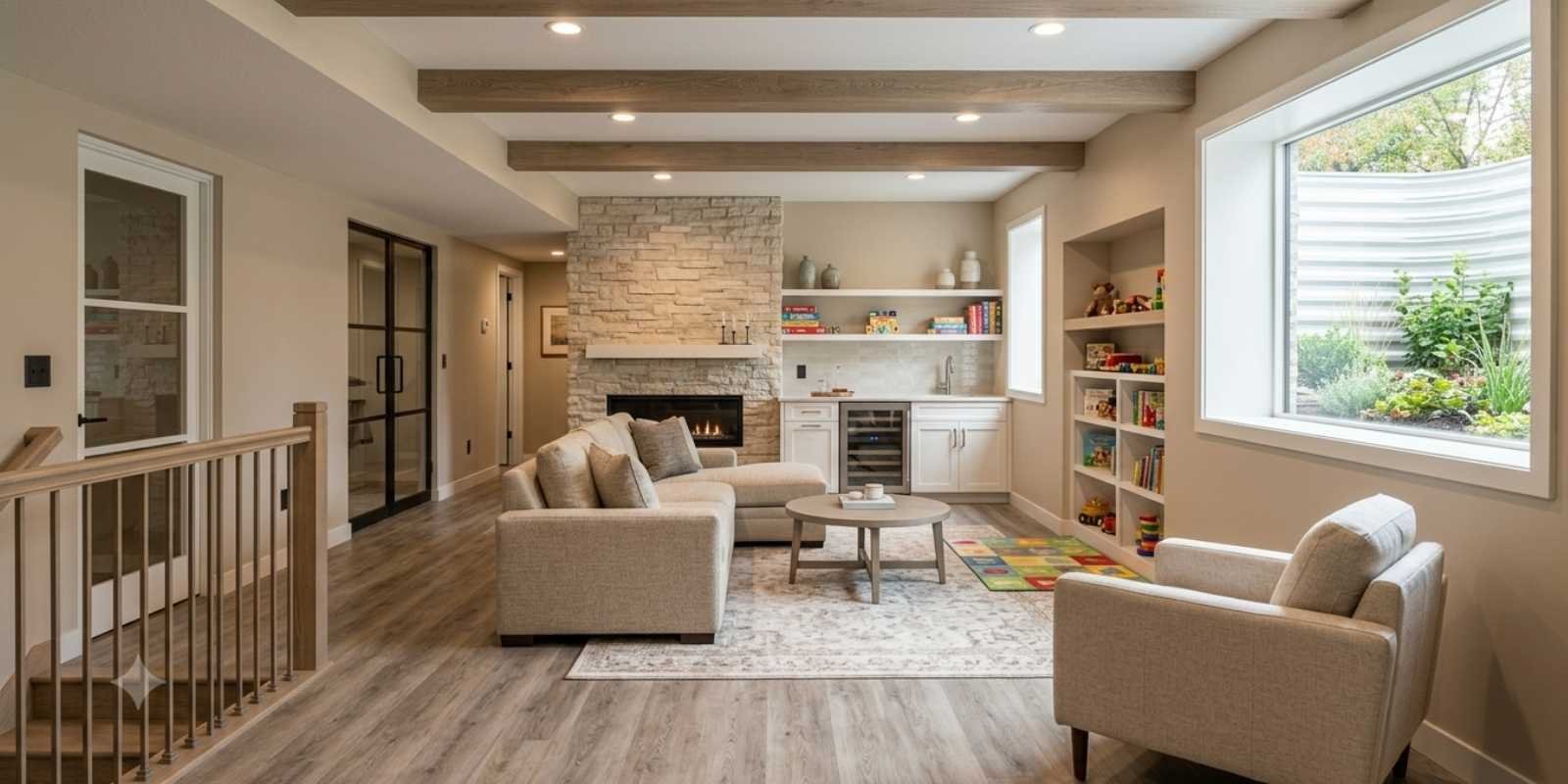

A daylight basement is a below-grade living space built into a sloped lot. At least one wall sits above ground, allowing full-size windows and natural light. Unlike standard basements, daylight basements don’t rely on artificial lighting or minimal ventilation.
They feel like a true extension of your main floor: brighter, more comfortable, and more livable. For South Jordan homeowners, sloped terrain and split-level foundations make this basement type especially practical. It adds finished square footage, improves indoor air quality, and increases resale value without the cost of an addition.
What Is A Daylight Basement?
So, what is a daylight basement? A daylight basement, also known as an English basement or partial exposure, is a basement constructed into a slope so that at least one side of the foundation is partially above ground. Full-size or half-size windows that let in fresh air and natural light are possible with this design. Because daylight basements are exposed to natural light, they feel brighter and more comfortable than typical basements, which mostly depend on artificial lighting and ventilation.
A full walkout basement features an exterior door heading outside, whereas a conventional basement is usually entirely underneath. A daylight basement fits nicely between the two. Although it doesn’t usually have an outside door, it does have enough outside exposure to include windows, which provide warmth, visibility, and general livability that regular basements don’t.
Homes with sloped lots or split-level foundations, which are typical in many South Jordan areas, are perfect for this configuration. Instead of seeming like a dark, contained area, a daylight basement can be designed to feel and look like an extension of the main floor.
Daylight Basement Vs. Walkout Basement
Although both daylight and walkout basements have the advantage of being partially above ground, South Jordan homeowners should be aware of the differences between the two.
Daylight Basement
- Built into a slope with partial exposure
- Features full- or half-height windows
- Does not always have an exterior door
- Provides excellent natural light
- Works well for properties with gentle or moderate slopes
Walkout Basement
- Includes a full exterior door leading directly outside
- Often features a patio or backyard access
- Requires a steeper slope to accommodate a full-height exit
- Offers the most convenient outdoor access
A daylight basement is more adaptable than a walkout design because it doesn’t need a steeper slope. This option is frequently chosen by homeowners who desire additional living space and natural light but do not require direct yard access.
Daylight basements are occasionally simpler and more affordable to construct for South Jordan’s diverse topography. Walkout basements are excellent for optimizing outdoor access, but daylight basements offer a well-balanced combination of lower-level comfort, light, and functionality.
Key Benefits Of A Daylight Basement
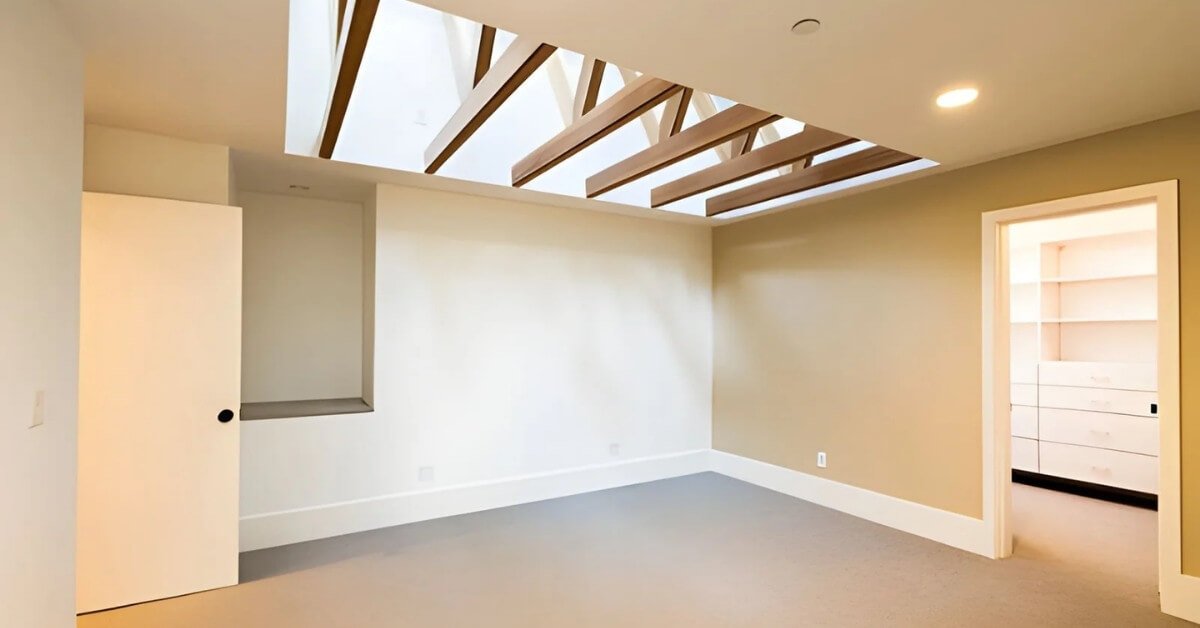
Beyond looks, a daylight basement has a number of benefits. It’s the best approach to optimize usable square footage without sacrificing comfort or utility for a lot of Utah homeowners.
1. Natural Light
The ability to enjoy actual sunshine is the main advantage. The lower floor feels cozier, happier, and more roomy thanks to the large windows. Furthermore, natural light lessens the need for artificial lighting, creating a calmer and more comfortable atmosphere in the basement.
2. Better Ventilation
Fresh air circulation is significantly enhanced by daylight basements’ exterior-facing windows. This lessens moisture accumulation and musty smells, which are frequent problems in completely subterranean basements.
3. More Livable Space
Higher ceilings, improved ventilation, and natural light make it simpler to transform a daylight basement into a completely functional living space. They are frequently utilized by South Jordanian homeowners as rental suites, party rooms, or lower-level living areas.
4. Energy Efficiency
By letting sunshine warm the room during the day, windows aid in temperature regulation. This can help make a basement more energy-efficient and work in tandem with HVAC systems.
5. Increased Home Value
Because they provide improved practicality and aesthetic appeal, daylight basements are a strong selling factor. Adding a daylight basement is a clever approach to increasing house value enhancement, whether you’re building a new home or remodeling an existing one.
Common Uses For Daylight Basements
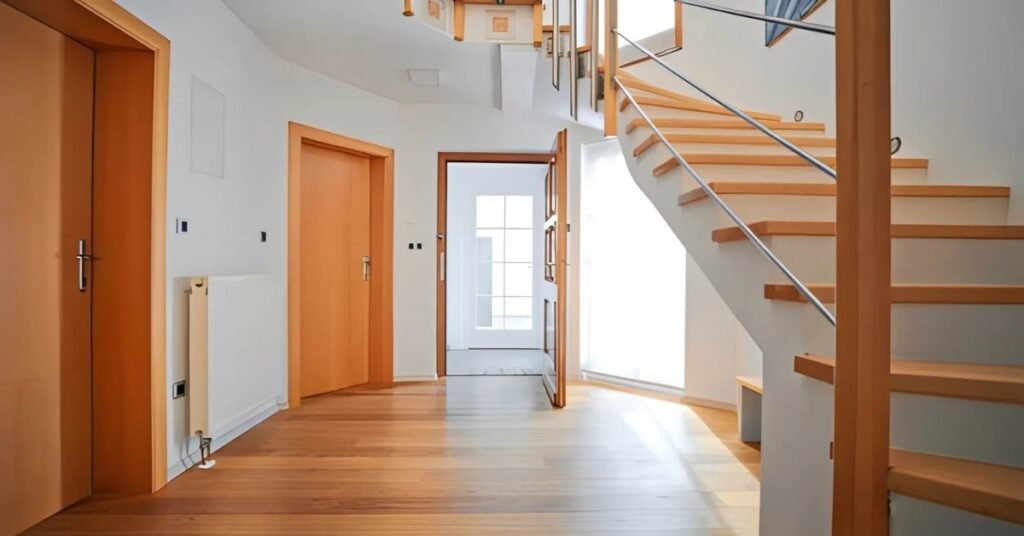
Homeowners can fully utilize the additional square footage in daylight basements since they feel more like conventional living areas. These are a few of the most popular uses:
Family Room Or Lounge
For a second living space where the family may unwind, watch movies, or host visitors, a daylight basement is ideal. While the privacy makes it perfect for evenings, the natural light makes it comfortable during the day.
Home Office
Daylight basements are becoming great places for home offices as more individuals work remotely. The windows prevent the room from feeling lonely, and the peaceful setting improves concentration.
Fitness Room Or Home Gym
Daylight basements are excellent places to work out because of the benefits of ventilation and lighting. Mirrors, rubber floors, and storage can be installed without feeling claustrophobic.
Guest Suite
When visiting friends or family, a bedroom and bathroom in a daylight basement provide a comfortable and private haven. Safety regulations are also met by appropriate egress windows.
Entertainment Or Rental Space
A lot of South Jordanian homeowners use their daylight basements as game rooms, cinemas, or even short-term rental properties. A daylight basement can easily become a multipurpose room that eventually pays for itself with the correct setup.
Why Hire A Local Basement Contractor In South Jordan?
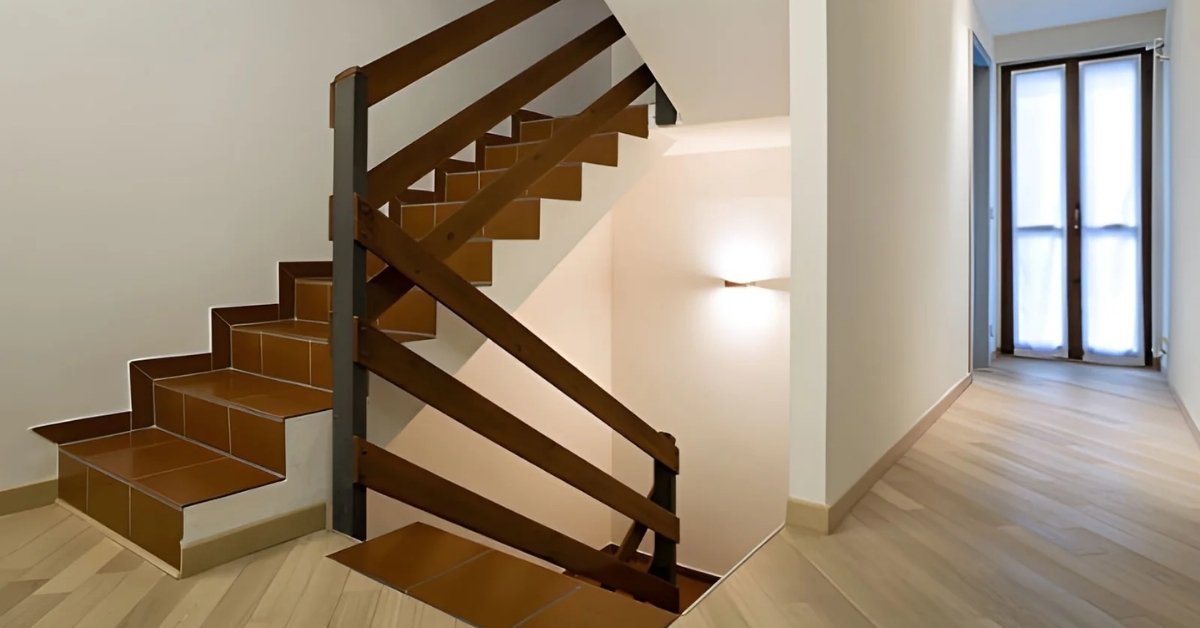
Even while the idea of a daylight basement appears simple, effective design and remodeling call for professional knowledge, particularly given Utah’s particular soil and climate.
Local Knowledge Matters
South Jordan contractors such as CCS of Utah understand how to manage:
- clay-rich soils
- drainage and grading requirements
- moisture control
- insulation needs
- seismic considerations
- local building codes
This guarantees the efficiency, safety, and comfort of your daylight basement.
Customized Design
A local contractor may evaluate the slope, kind of foundation, and angles of natural light on your land to design a layout that complements the rest of your house.
Faster, Reliable Service
Working with a local remodeling professional facilitates communication and guarantees prompt response times for consultations, inspections, and construction milestones.
Working with a South Jordan professional is the ideal first step if you want to know what is a daylight basement – a daylight basement that seems like a real extension of your living area.
FAQs
1. What makes a basement a daylight basement?
A daylight basement is partially above ground with windows that allow natural light to enter, giving it a brighter, more open feel than traditional basements.
2. Is a daylight basement more expensive to build?
It can cost slightly more than a fully underground basement due to window installation and grading requirements, but it often adds more resale value.
3. Can I remodel my existing basement into a daylight basement in South Jordan?
In some cases, yes—especially if your home is already built into a slope. A contractor can determine whether new window wells or foundation adjustments are feasible.
4. What are the advantages over a walkout basement?
Daylight basements offer natural light without needing a full exterior door or steep slope. They’re often more budget-friendly and easier to integrate into existing designs.
5. Do daylight basements increase home value?
Absolutely. Because they’re more livable, bright, and versatile, they often increase property value significantly.