It’s exciting to finish or renovate your South Jordan basement. You get more opportunities, additional living space, and a higher house value. However, your stairs need to be up to date with safety requirements before you can enjoy your new rental suite or family room.
Basement stair handrail requirements are among the most neglected modifications. Handrails are more than just ornamental. They help your home pass inspection, promote balance, and reduce falls. Stair railings in many older South Jordanian homes are outdated or non-compliant.
Everything you need to know about Utah rules, basement stair railing standards, and how to prevent expensive errors is included in this guide.
Basement Stair Handrail Code Requirements Overview
Knowing the fundamentals is the first step in understanding basement stair handrail requirements.
The purpose of handrails is to:
- Prevent falls
- Support them as they go up and down
- Comply with Utah’s residential code’s safety requirements
- Ensure your house passes the inspection
With certain local modifications, Utah abides by the International Residential Code (IRC) as set down by the Utah State Legislature. This code specifies when and how handrails must be installed.
When Are Handrails Required?
Generally, handrails are needed when:
- There are four or more risers in a staircase
- The steps lead to a finished living area
- The basement is being transformed into a usable area
Even if the house was built years ago, your stairs in South Jordan will probably need to adhere to the most recent basement stair handrail requirements if you’re renovating your basement.
Handrail Height And Clearance Specifications
Height is one of the most crucial aspects of basement stair handrail requirements.
Handrail Height Code
Usually, handrails need to be installed:
- In the 34–38 inch range
- Measured vertically from each step’s front edge, or stair nosing
The railing might not pass inspection if it is too high or too low.
Stair Handrail Clearance
Proper clearance is also necessary:
- There must be at least 1.5 inches between the wall and the railing
- Sufficient room for a complete, cozy grip
- Nothing is preventing your hand from moving
This guarantees that the rail has a purpose beyond aesthetics.
Continuous Grip Requirement
Handrails have to:
- Continue running from the highest riser to the lowest
- Not have gaps or breaks
- Make sure corners have seamless transitions
Despite their seeming smallness, these features are crucial to fulfilling the basement stair handrail requirements.
When Handrails Are Required On Basement Stairs?
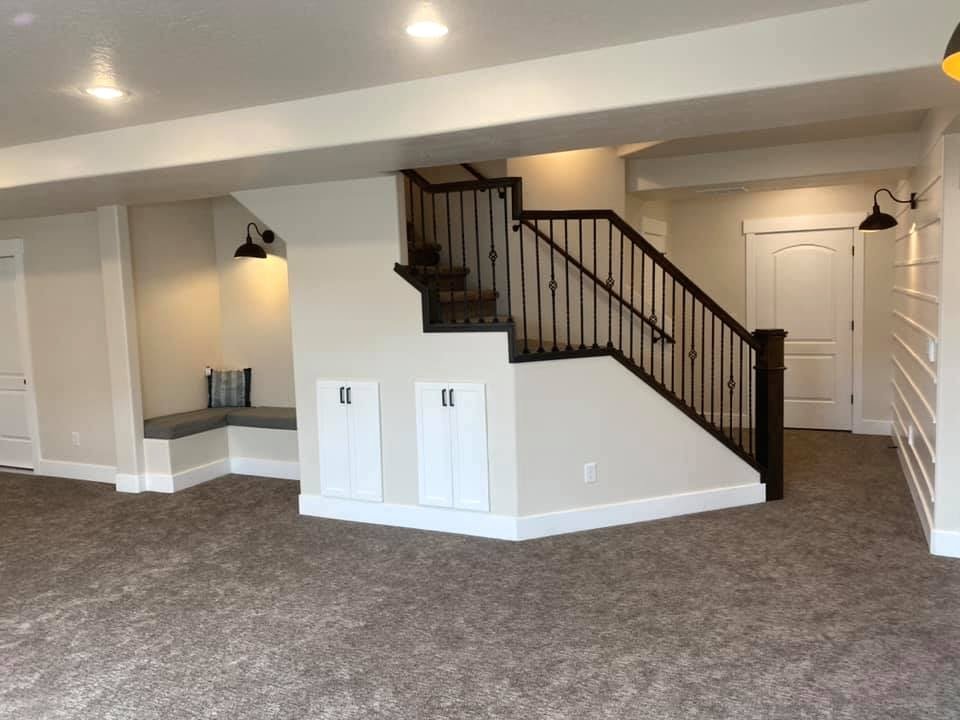
Many homeowners want to know if both sides need handrails.
Number Of Risers Rule
If the stairs in your basement have at least one handrail, it is necessary to have at least four risers. Most stairways in basements can easily pass this test.
Open Vs. Enclosed Staircases
There must be at least one compliant handrail on enclosed stairs with walls on both sides. Depending on the design, open staircases may need both a guardrail and a handrail.
Remodel Vs. New Construction
If you’re:
- Finishing a basement
- Making a living space out of storage
- Adding a rental property
Regardless of whether they were “grandfathered in,” your steps must adhere to the most recent basement stair regulations.
Handrail Design And Graspability Standards
Not every railing is considered to be a compliant handrail.
Graspable Handrail Code
To comply with the basement stair handrail requirements, the rail needs to be:
- Simple to encircle with your fingers
- Flat and free of jagged edges
- Made to provide a firm grip
Diameter Requirements
Handrails that are circular should be approximately 1.25 to 2 inches in diameter.
Rails that are not circular must maintain a perimeter dimension inside the parameters of the code and adequately provide a surface that can be grasped.
Compliant stair railings do not include large decorative wood ledges.
Return-To-Wall Safety Rule
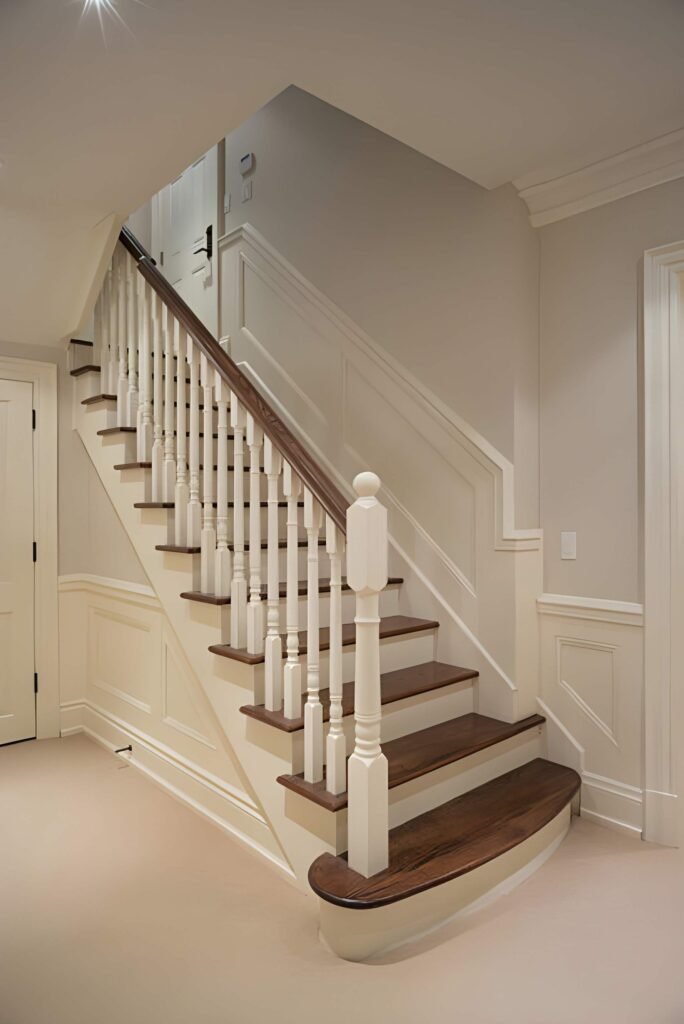
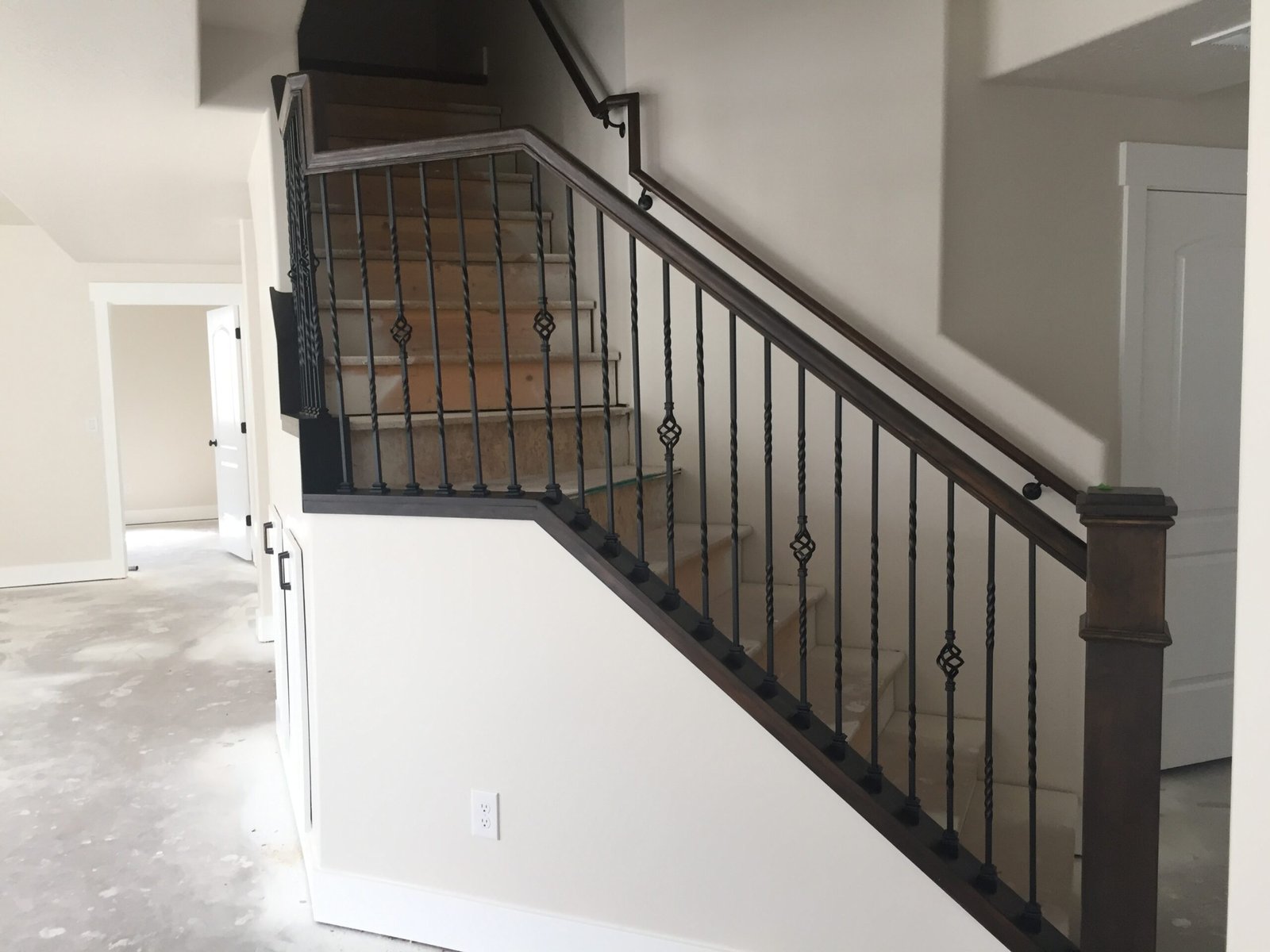
Handrails have to go back to the wall or end up in a newel post.
By doing this, the usual stair inspection failure issue of clothing or bags catching on the rail can be prevented.
Guardrails Vs Handrails: Understanding The Difference
Although handrails and guardrails perform different functions, homeowners frequently mix them up.
Handrails
- Provide support for your grip
- Needed for stairs with four or more risers
- Needs to adhere to the graspability requirements
Guardrails
- Prevent falls from high places
- Needed when the walking surface is at least 30 inches above the ground below
- Needs to adhere to certain height requirements
Basement Guardrail Requirements
Generally, guardrails need to be:
- 36 inches or more in height
- Placed on the exposed sides of landings or staircases
- Balusters are spaced fewer than 4 inches apart in the design
These requirements are in line with the stair railing code Utah.
Building Code Requirements In South Jordan, Utah
You have to abide by local building codes when remodeling in South Jordan.
The South Jordan City Government established guidelines for the city’s operations that are based on Utah’s requirements for residential building.
South Jordan Building Code Overview
- Complies with the Utah Residential Code
- Permits are necessary for remodeling a basement
- Inspections are necessary before the project’s completion
Basement Remodeling Permit
A permit will likely be needed if you:
- Finish a basement
- Adjust the stairway’s design
- Install new stair rails or replace old ones
- Create a living room out of the basement
Not getting a permit may result in:
- Delays
- Fines
- Required removal of non-compliant work
Always get the city’s approval before starting.
Common Basement Stair Code Violations
Simple errors lead to a lot of basement stair inspection failures.
The following are common basement code violations:
1. Improper Rail Height
Handrails that are positioned over 38 inches or below 34 inches.
2. Missing Handrail Returns
Open ends that don’t touch the wall again.
3. Non-Graspable Designs
Oversized ornamental wood caps that are difficult to hold.
4. Loose Or Unstable Installation
Handrails must be able to withstand applied force without swaying.
5. Missing Guardrails
Stair sides that are open without adequate fall protection.
These problems frequently result in failed stair inspections and the need for additional inspections.
Why Hiring A Professional Contractor Matters
There is no room for shortcuts when it comes to stair safety.
A professional basement contractor like CCS of Utah in South Jordan will:
- Be familiar with the updated basement stair handrail requirements
- Install stair railing solutions that comply with regulations
- Get necessary permits
- Prepare for inspection
- Prevent expensive corrections
Installing stairs incorrectly can:
- Put off your project
- Increase expenses
- Create liability risks
A stair railing installation expert guarantees a safe and elegant basement renovation.
Frequently Asked Questions
1. What are the basement stair handrail height requirements?
It is generally required that handrails be positioned 34 to 38 inches above the stair nosing.
2. Are handrails required on both sides of the basement stairs?
It is usually necessary to have at least one compliant railing. Depending on the Utah stair code, wider staircases could need handrails on both sides.
3. Do basement stair handrails need to be continuous?
Yes, according to established standards, handrails for basement stairs must continue uninterrupted from top to bottom.
4. What is the difference between a guardrail and a handrail?
When using the stairs, handrails provide support for your grip. Guardrails stop falls from high places, such as landings or exposed stair sides.
5. Do South Jordan building codes require permits for stair updates?
Yes. Permits and inspections are required for many basement remodeling projects that involve stair changes.
“Need your basement stairs updated to meet code? Contact South Jordan’s trusted basement remodeling professionals for safe, compliant stair installation.”