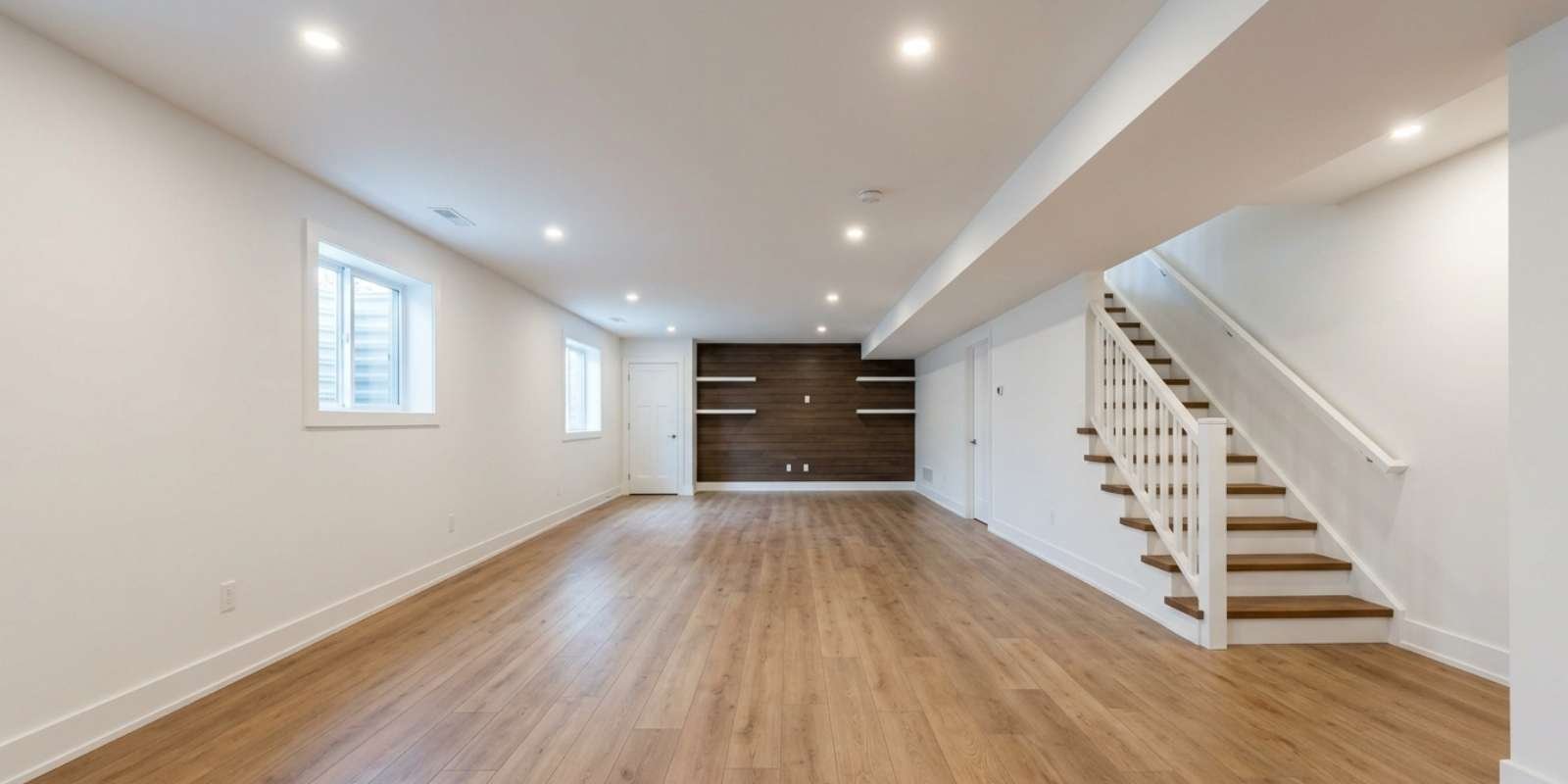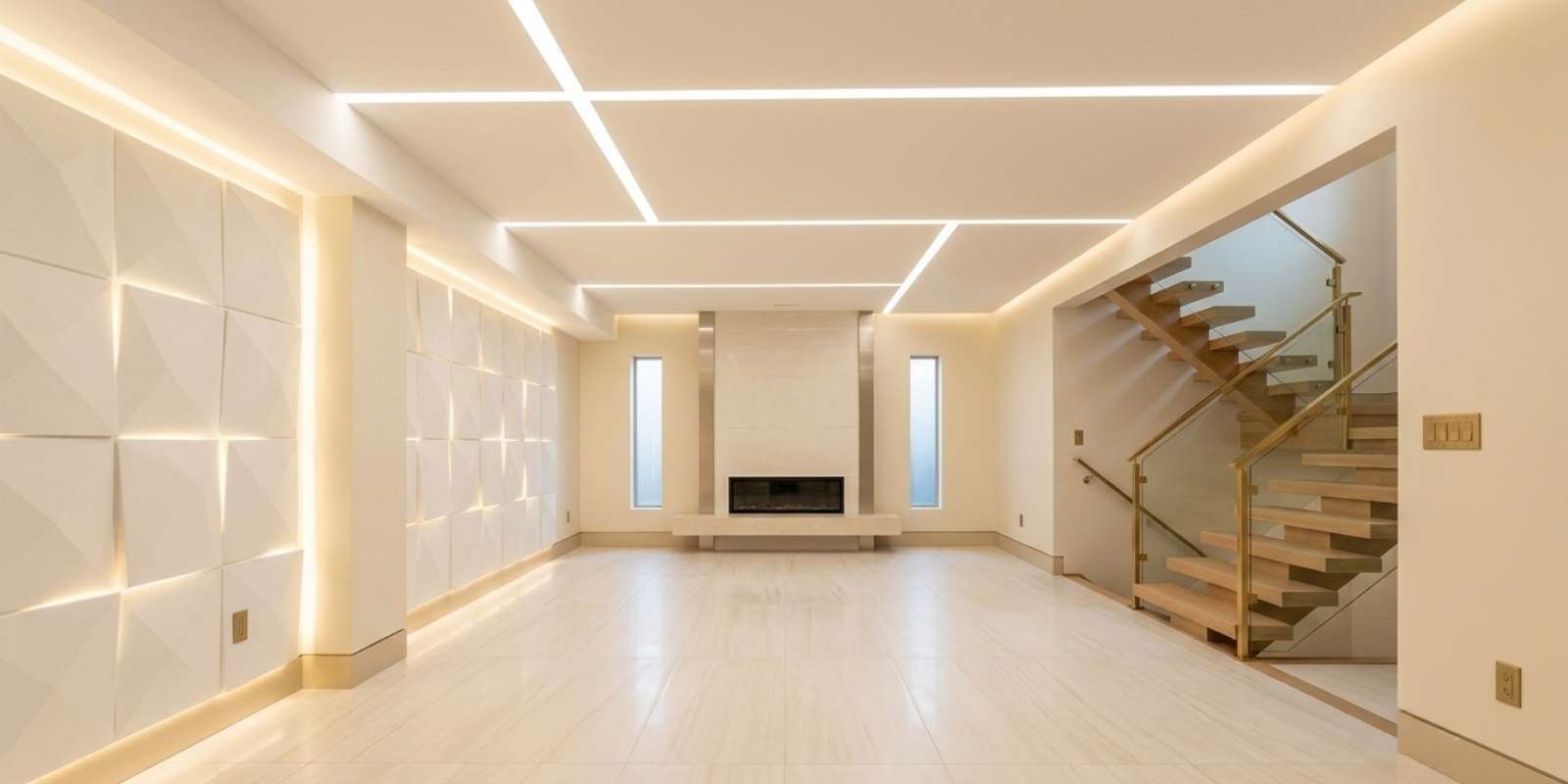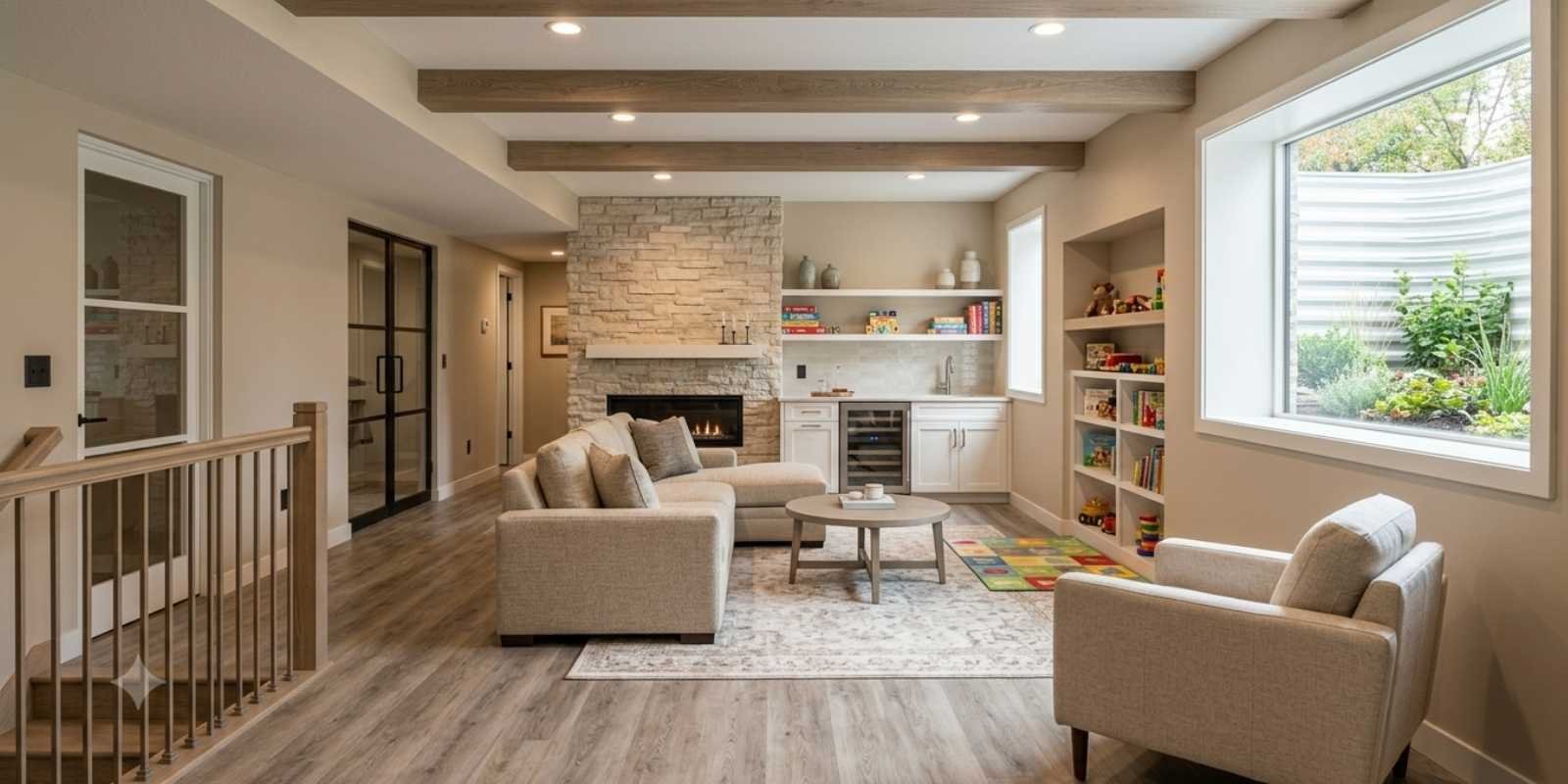

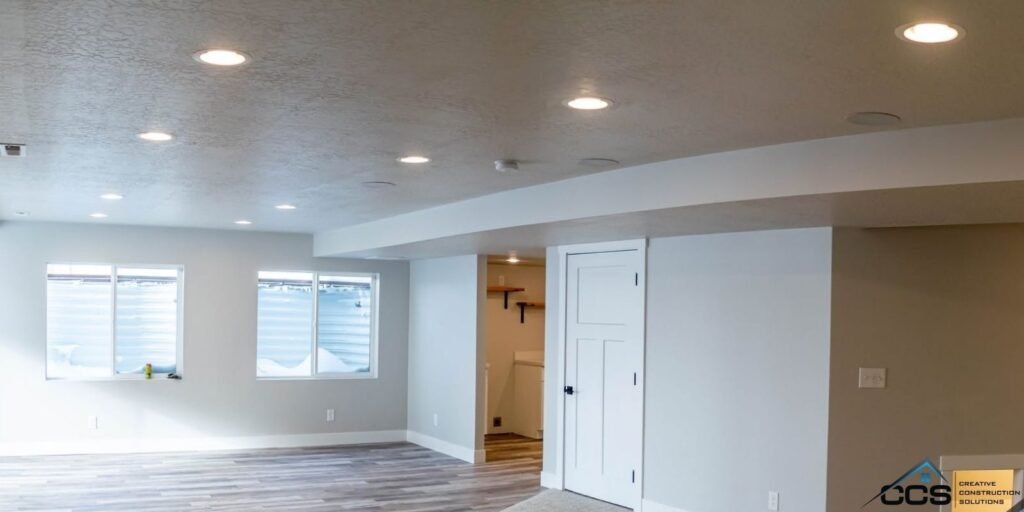
Here’s one thing you shouldn’t skip when renovating your basement: complying with the basement finishing building code in Bluffdale, Utah. You can’t just start choosing flooring and paint colors for your project and proceed with the work. You need to be aware of the requirements set forth by the city’s building department before any framing is installed, lest you incur hefty fines and compliance costs.
The building code for basement finishing in Bluffdale, Utah, covers insulation, wiring, framing, egress windows, and ceiling height. Skipping permits or taking shortcuts can slow down your project, cost you money, or create issues when you sell.
Being aware of the regulations in advance helps keep your project on track, code-compliant, and ready for approval.
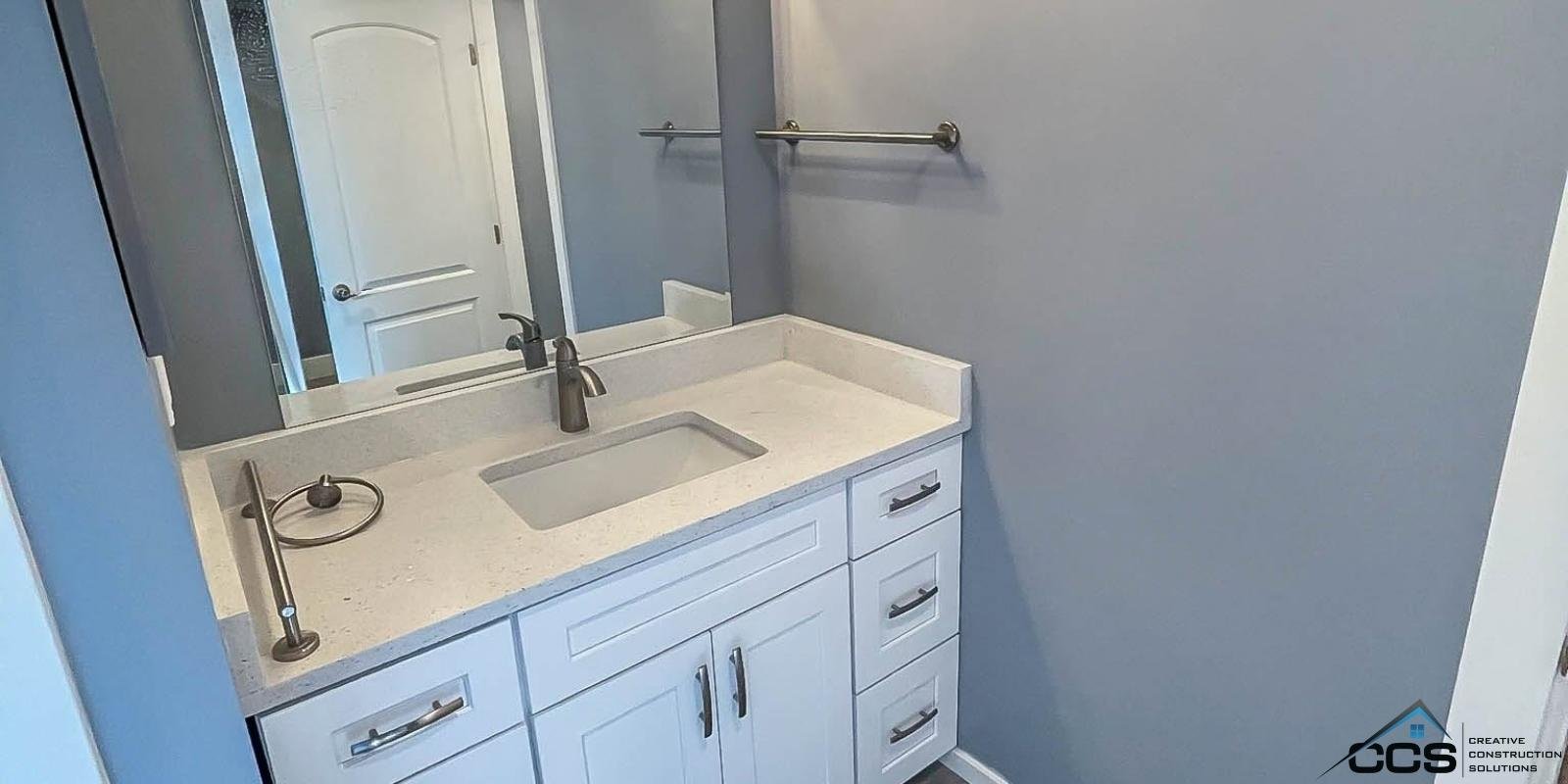
What Is Basement Finishing Building Code and Why It Matters In Bluffdale, Utah?
Basement building code Utah is a legal standards that govern how homes are constructed and improved. They cover the following for finished basements:
- Electrical systems
- Insulation
- Life-saving features such as smoke detectors and egress windows
- Structural framing
- Ventilation and plumbing
Bluffdale complies with Utah’s IRC basement requirements, with any local modifications. Bluffdale is located in Salt Lake County, so before starting any work, be sure the local building department has the most recent permit requirements.
Code compliance is more than simply red tape. It helps your home value accurately, protects your family, and maintains the validity of your homeowner’s insurance. Outside-of-code work frequently needs to be removed and rebuilt at your expense.
Do You Need A Permit To Finish A Basement In Bluffdale?
Yes, you need a permit for finishing a basement in nearly every situation. Your project needs a building permit Utah basement whenever it involves:
- Adding electrical circuits
- Adding a basement HVAC system
- Building new walls
- Running plumbing
This is not limited to contractor work; it also applies to do-it-yourself work.
Before work is allowed to start, your project must pass inspections at predetermined stages once a basement permit Bluffdale has been obtained.
Finish basement without permit presents a serious risk. Before a retroactive permit is granted, you might need to pay fines, bring your work up to code, or open walls for inspection. Also, unapproved repairs might lower the value of your house and prevent a future sale.
Understanding basement finishing cost early in the planning process helps homeowners budget for permits, inspections, materials, and code-compliant upgrades.
Ceiling Height Requirements For Finished Basements
For liveable spaces, such as bedrooms, living rooms, and offices, the IRC mandates a 7 feet minimum ceiling height basement. Utah bathrooms and hallways usually have a lower threshold of 6 feet 8 inches.
Within certain limits, ducts, beams , and other obstructions may fall below the minimum. Here’s a habitable space code to remember:
- Drop ceilings must still be at least a certain height, but they must still meet the minimum height
- Before framing starts, plan the height of your ceiling
- Low mechanical systems might become costly issues if they are detected later
Egress Window Code Requirements For Basement Bedrooms In Bluffdale
It is required to have a basement bedroom egress window. Here are IRC egress window requirements:
- At least 5.7 square feet of net clear space
- A minimum of 24 inches opening height
- A minimum of 20 inches of opening width
- A 44 inches maximum sill height from the floor
Many standard sliding basement windows fail to meet these requirements. This is among the most frequent causes of inspection failures for basement bedroom building projects. Before you frame, measure the existing windows.
Also, window wells for below-grade windows must have an interior dimension of at least 36 inches. A cover is necessary if the well is deeper than 44 inches. Because egress window Bluffdale installation is more expensive and time-consuming, set a budget for excavation and possible waterproofing.
Basement Finishing Building Code In Bluffdale, Utah: Electrical And Framing Standards
Basement framing code includes:
- Fire blocking to prevent the spread of fire through cavities in walls and floors
- Proper bearing wall connections and header sizing
- Do a structural check to check whether any walls are load-bearing
Basement electrical code (Utah) includes:
- Arc Fault Circuit Interrupter (AFCI) protection for circuits in common living areas and sleeping areas
- Ground Fault Circuit Interrupter (GFCI) outlets near water, in bathrooms, and in unfinished areas
- Outlets should be spaced no more than 12 feet apart along a wall
Carbon monoxide and smoke detectors are required in:
- Each bedroom
- Every floor of the house
- Houses with fuel-burning appliances or associated garages
Insulation And Energy Code Requirements
Bluffdale falls in IECC Climate Zone 5. This implies that basement insulation code Utah residents have to follow, is more stringent than those in warmer areas. Continuous insulation or a comparable wall assembly is required by Utah’s energy code basement walls to minimize heat loss.
Vapor barrier basement control is also important in Climate Zone 5. Your wall layout and type of insulation will determine whether you need a vapor retarder. Preventing mold, moisture accumulation, and long-term structural damage can be achieved by doing this correctly at the rough-in.
Plumbing And HVAC Code For Finished Basements
Basement plumbing code Utah includes:
- Rough-in plumbing needs to have enough slope, the right drain size, and suitable venting
- Abasement bathroom permit and inspection are necessary for any plumbing work
- Exhaust fans must vent outdoors, not into the attic or joist cavity
HVAC basement finish code includes:
- A mechanical permit is necessary
- Combustion air, return air routes, and duct size must adhere to code
- Undersized or improperly ventilated systems may affect air quality throughout the home
What Inspections Are Required During A Basement Finish In Bluffdale?
To comply with the basement finishing building code in Bluffdale, Utah, most projects undergo three basement inspections:
1. Rough-In Inspection
Rough-in inspection basement happens after the installation of the plumbing, electrical, and framing, but before the walls are closed
2. Insulation Inspection
Insulation inspection basement happens before the installation of drywall.
3. Final Inspection
Final inspection basement finish happens after all the work.
Each step of the process cannot be completed until the previous inspection is approved. The inspections required for your project’s scope will be listed in your permit.
How A Permitted Basement Finish Protects Your Investment?
A permitted finish adds verified square footage that supports a higher appraisal. Unpermitted basement Utah can:
- A buyer’s inspector can flag the unpermitted work
- During a sale, you can encounter demands for repairs or price reductions.
- Lenders may limit what a buyer can borrow by excluding the space from the home’s valuation
A certificate of occupancy is the documentation that certifies the quality of the work. It protects your investment and simplifies future transactions.
Working With A Licensed Contractor For Code-Compliant Basement Finishing In Bluffdale Utah
Your risk is significantly minimized by a licensed basement contractor Bluffdale like CCS of Utah who obtains permits, oversees inspections, and completes work internally. They are responsible for the work meeting code at every level and keep up with IRC updates and any local Bluffdale code modifications.
Conclusion
Finishing a basement in Bluffdale requires more than good design—it requires compliance with local building codes, permits, and inspections. Understanding the basement finishing building code in Bluffdale, Utah helps homeowners avoid costly mistakes, inspection failures, and project delays. By planning ahead and working with a licensed contractor, you can create a safe, comfortable, and code-compliant living space that adds long-term value to your home.
Frequently Asked Questions
What building code applies to basement finishing in Bluffdale, Utah?
Residential construction in this municipality adheres strictly to the International Residential Code. These guidelines regulate everything from safe framing to proper thermal insulation barriers. Local code amendments also dictate specific structural and moisture control requirements.
Do I need a permit to finish my basement in Bluffdale?
City ordinances require official residential permits before starting any major interior construction. This legal documentation covers your structural framing, mechanical routing, and drywall installation. Skipping this crucial step often creates massive complications during future home appraisals.
What is the minimum ceiling height for a finished basement in Utah?
Habitable living spaces must maintain a clear vertical height of at least seven feet. Certain mechanical drops for HVAC ductwork can measure slightly lower under strict exceptions. Measuring early prevents costly layout mistakes before ordering drywall materials.
Does my basement bedroom need an egress window in Bluffdale?
Every designated sleeping room absolutely requires a code-compliant emergency exit opening. These safety fixtures must meet precise net clear opening width and height dimensions. Older baseline windows rarely provide sufficient space for emergency rescue operations.
What electrical requirements apply to a finished basement in Utah?
New lower-level circuits must utilize arc-fault circuit interrupter protection for modern safety. Ground-fault protection is also mandatory near any plumbing fixtures or wet bars. Certified inspectors must review all wiring layouts before covering the walls.
What happens if I finish my basement without a permit in Bluffdale?
Municipal code enforcement officers can issue costly fines and halt your project immediately. Homeowners are frequently forced to tear down fresh drywall for delayed structural inspections. This unpermitted work ultimately damages your overall property resale value.
“Wondering whether your basement plans meet Bluffdale’s building codes? CCS of Utah pulls all permits, handles every inspection, and keeps the work in-house from start to finish. Contact us for a free consultation.”