
The best basement flooring options transform your space by enhancing comfort, style, and durability. Basements face tough conditions — moisture, temperature swings, and heavy traffic — that quickly wear down poor material choices. Ignoring these factors often leads to costly repairs and disappointing results.
This guide outlines the best basement flooring options, how to tackle basement-specific challenges, and how to choose a solution that fits your style and budget. Whether renovating or starting from scratch, you’ll finish confidently.
How to Choose the Best Basement Flooring Options
Choosing the best basement flooring options depends on your basement’s conditions, intended use, and budget. Since basements are more prone to moisture and temperature changes than other areas of the home, selecting the right flooring helps improve comfort, durability, and long-term performance.
Consider These Factors Before Choosing Flooring
- Moisture Levels: If your basement is prone to dampness, choose waterproof materials like luxury vinyl plank (LVP), porcelain tile, sealed concrete, or epoxy flooring.
- Room Purpose: Match the flooring to how you’ll use the space. Carpet tiles work well in bedrooms, rubber flooring is ideal for home gyms, and tile or epoxy suits laundry and utility rooms.
- Budget: Consider not only the material cost but also installation, underlayment, and future maintenance.
- Maintenance: Select flooring that is easy to clean, moisture-resistant, and durable enough for your household’s daily use.
By considering these factors, you can confidently choose the best basement flooring options that fit your lifestyle, design preferences, and renovation goals.
Top basement flooring options: Pros, cons, and best uses
Your basement’s function, environment, and aesthetic goals all influence the ideal flooring choice. Unlike above-ground spaces, basements present unique conditions — cooler temperatures, higher humidity, and proximity to concrete subfloors. Selecting the right material ensures comfort, durability, and longevity while complementing your overall interior design.
Let’s explore the leading flooring options for basement environments and evaluate their performance, appearance, and ideal applications.
Luxury vinyl plank (LVP) and luxury vinyl tile (LVT)
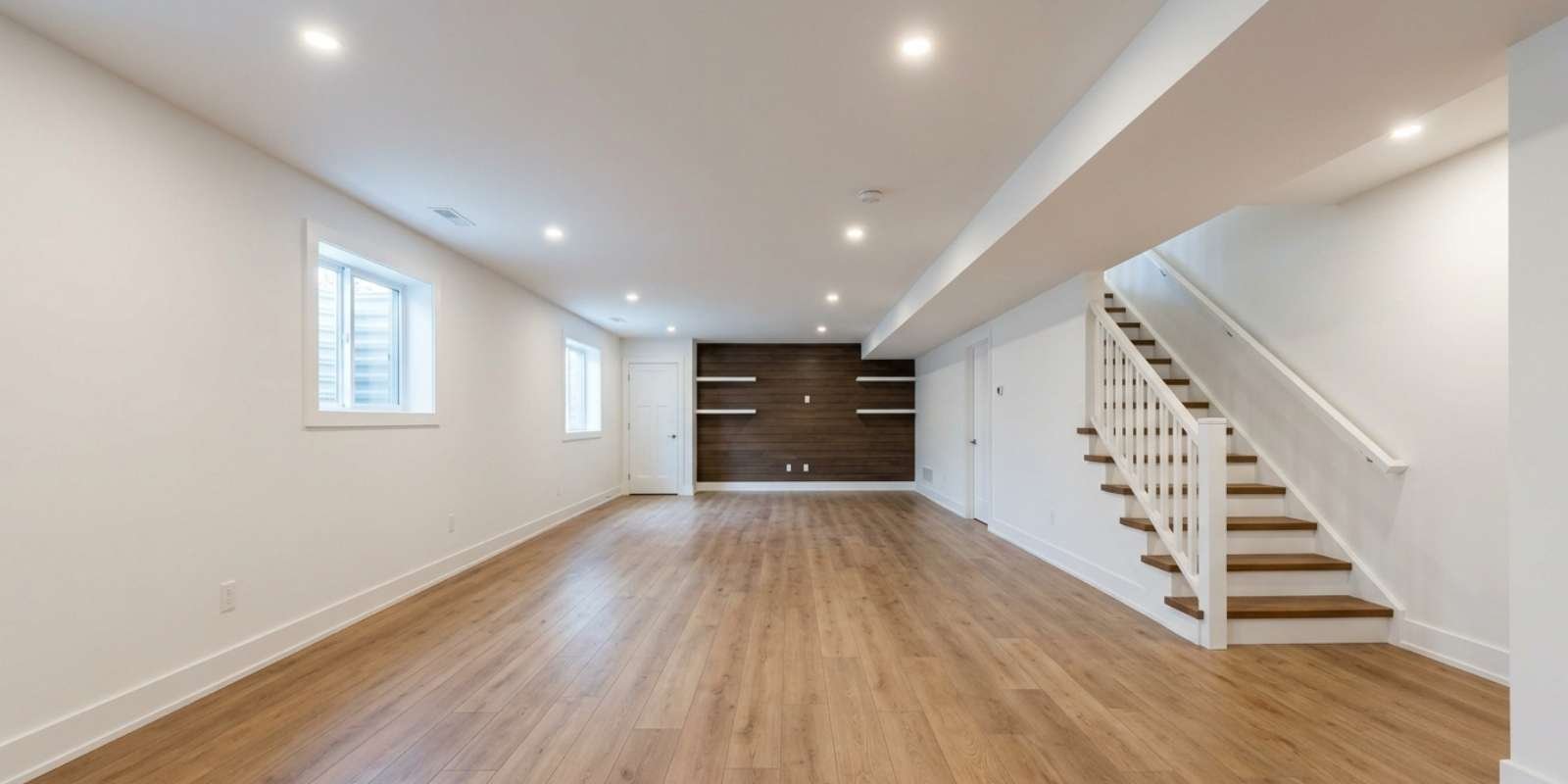
Luxury vinyl remains one of the most versatile and user-friendly options for basement flooring. Available in planks or tiles, it replicates the look of hardwood, natural stone, or ceramic while offering better resistance to moisture. Its rigid core construction allows it to perform well on slightly uneven subfloors, and the built-in underlayment in many products enhances comfort and sound insulation.
Luxury vinyl is Ideal for finished basements where style matters and works well in media rooms, bedrooms, or open living areas. With proper installation and care, it withstands wear from kids, pets, and foot traffic without showing signs of damage.
Engineered wood
For homeowners who want the warmth and authenticity of real wood, engineered hardwood provides a stable and more moisture-tolerant alternative to solid wood.
Its layered design better resists expansion and contraction, making it compatible with basement conditions when paired with vapor barriers or raised subfloors. The top layer is genuine wood, so it can be sanded lightly depending on the thickness.
Engineered wood creates a cozy, elegant atmosphere, ideal for basement dens, libraries, or guest rooms where comfort and aesthetics are key.
Ceramic and porcelain tile
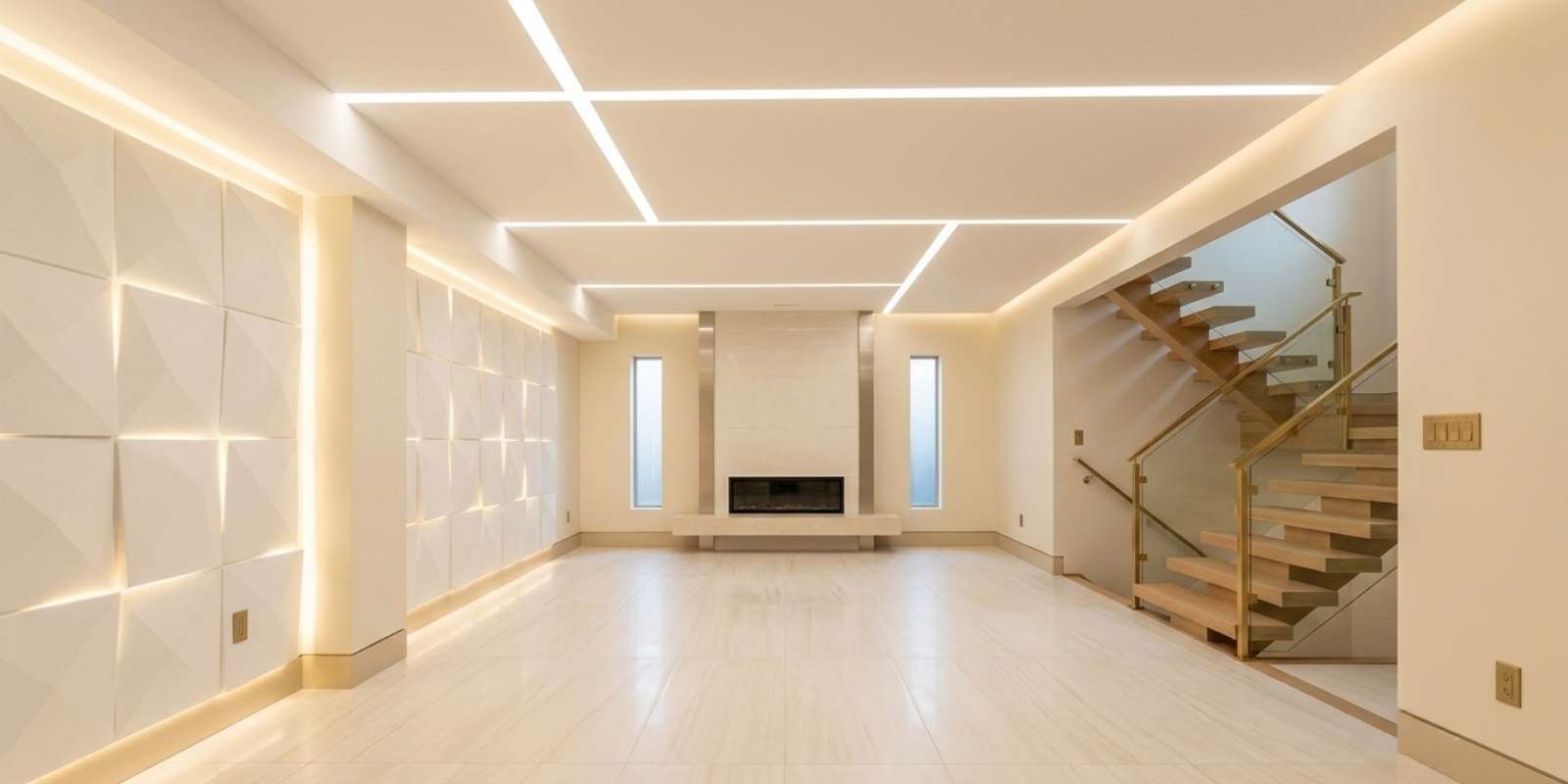
Known for their excellent water resistance, ceramic and porcelain tiles provide a reliable solution for basements that need frequent cleaning or face occasional moisture. They’re durable enough for mudrooms and laundry areas while offering a polished appearance for bathrooms or finished basement kitchens.
The low porosity of tile helps resist mold and mildew, and radiant heating systems can be installed underneath for added warmth. Tiles are available in countless styles, from marble-look porcelain to patterned ceramics, giving you full creative control over your flooring design.
Concrete
Concrete has evolved from a purely industrial material into a canvas for modern design. When sealed, stained, or polished, it delivers a clean, contemporary look that’s easy to maintain. Its thermal mass properties help regulate temperature, keeping your basement cooler in summer and warmer in winter when paired with radiant heat.
Customize the finish with dyes, saw-cut patterns, or epoxy overlays. Though concreted is harder underfoot, area rugs add comfort without detracting from the minimalist appeal.
Epoxy coatings
Epoxy flooring transforms plain concrete into a seamless, glossy surface that’s tough against spills, stains, and chemicals. Homeowners increasingly apply it in recreation areas and home gyms because it offers easy cleaning and a professional appearance, though many still use it in garages and utility rooms.
Customize epoxy with solid colors or decorative flakes to match your design preferences. Its smooth surface repels water, making it an excellent choice for flood-prone areas. For best results, ensure proper preparation and ventilation during installation.
Carpet tiles
If comfort and warmth are top priorities, carpet tiles provide a modular solution that’s soft underfoot and easy to maintain.
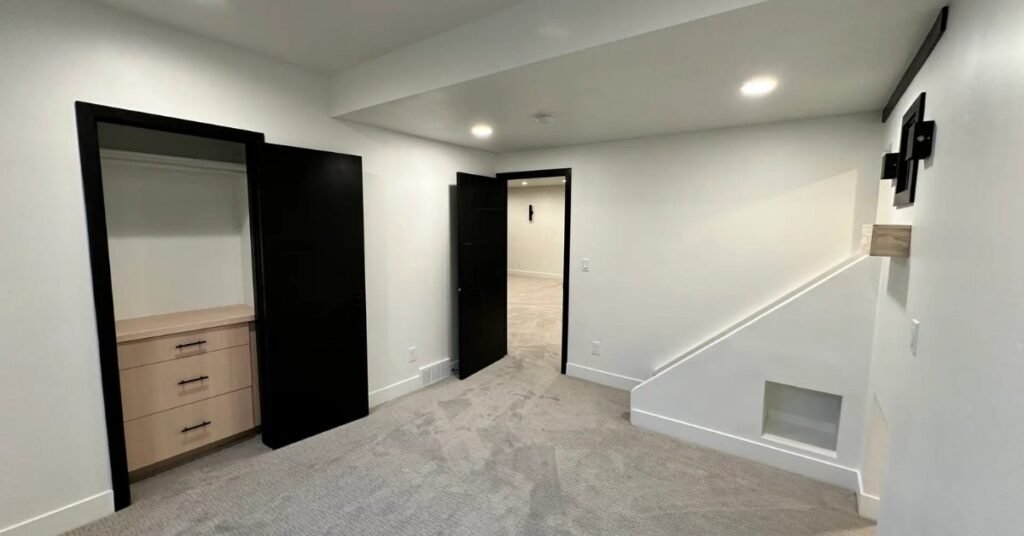
Unlike traditional wall-to-wall carpeting, these tiles allow for targeted replacements if a section becomes stained or worn. They come in various colors and patterns, enabling you to mix and match for a custom look. Carpet tiles also help insulate sound and temperature, making them ideal for basement bedrooms, kids’ play areas, or movie rooms.
For best performance, install them over a moisture-resistant underlayment in dry basements.
Rubber flooring
Rubber flooring delivers unmatched practicality for active basement spaces. Rubber absorbs shock, dampens noise, and resists slips, whether used in a home gym, children’s playroom, or hobby area. Interlocking tiles or rolls are easy to install, and many products are made from recycled materials, appealing to eco-conscious homeowners.
While not traditionally stylish, rubber flooring now comes in colors and patterns that complement modern and functional design schemes.
What to avoid in basement flooring
Choosing the wrong flooring for your basement leads to expensive repairs, uncomfortable living conditions, and ongoing maintenance headaches.
Not all flooring types are suitable since basements often experience higher humidity and occasional moisture exposure. Avoid materials that lack moisture resistance or proper insulation properties to protect your investment and ensure long-term satisfaction.
Solid hardwood flooring
While solid hardwood delivers timeless beauty and a high-end look, it is one of the least suitable options for basement environments. Hardwood’s natural composition makes it highly sensitive to moisture and temperature fluctuations. Even small changes in humidity cause solid wood to expand, contract, or warp.
Basements, especially those without proper climate control, create the perfect conditions for these issues to arise. If you want a wood look in your basement, opt for engineered wood or luxury vinyl planks that offer similar aesthetics with better stability.
Wall-to-wall carpeting without moisture barriers
Although wall-to-wall carpet feels warm and soft underfoot, it presents several challenges in below-grade spaces. Traditional carpet easily absorbs moisture, which leads to mold, mildew, and persistent odors. This becomes especially problematic in basements that lack proper sealing or ventilation.
If you choose carpet, install a high-quality moisture barrier underneath and use synthetic fibers that resist moisture better than natural ones. Carpet tiles offer a more manageable and flexible alternative, allowing you to replace only the damaged sections when necessary.
Laminate flooring without moisture protection
Laminate flooring may resemble wood and offer a budget-friendly price point, but standard versions do not perform well in damp environments. Without a built-in water-resistant core or sealant, laminate swells or delaminates when exposed to even minimal moisture.
Many lower-end products also fail to provide a sufficient barrier between the subfloor and the laminate surface. If you are considering laminate for your basement, choose a waterproof version specifically designed for high-humidity areas, and always pair it with the correct underlayment.
Avoiding these materials ensures your basement flooring remains attractive, durable, and safe. Always prioritize water resistance, easy maintenance, and temperature stability when selecting flooring for below-ground living areas.
Matching flooring to your basement’s purpose
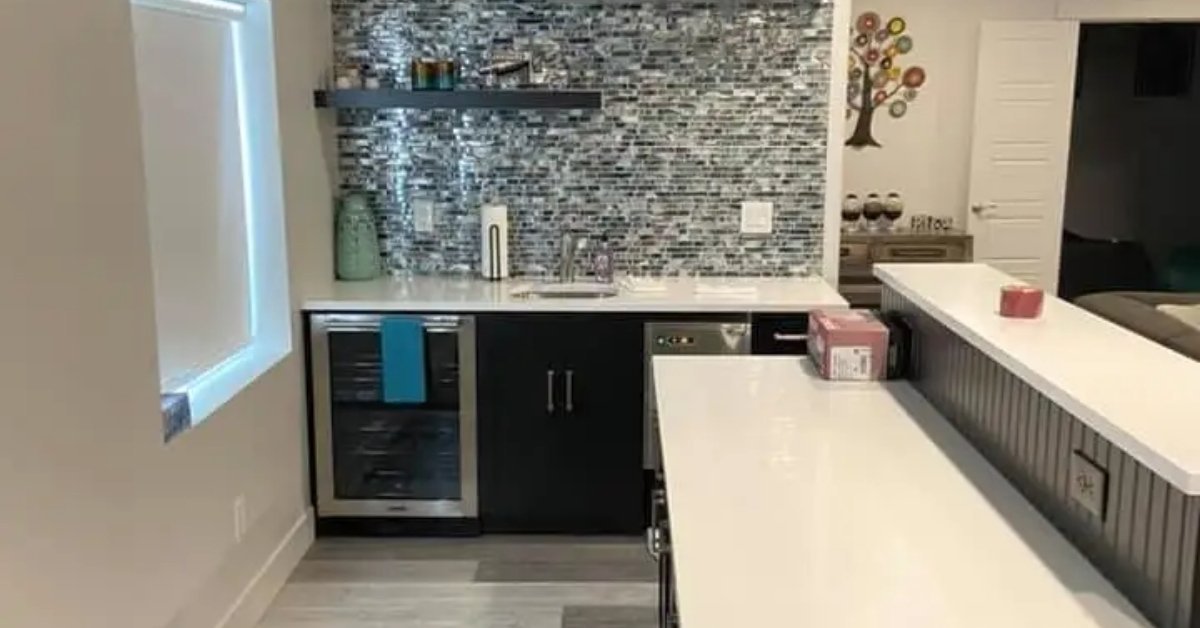
Selecting the right basement flooring starts with understanding how you plan to use the space. Each type of room presents different functional needs, which should guide your choice in materials, durability, and design. A family lounge requires comfort and visual warmth, while a home gym demands impact resistance and slip control.
Tailoring your flooring to the basement’s specific function maximizes performance and aesthetic value.
Family room
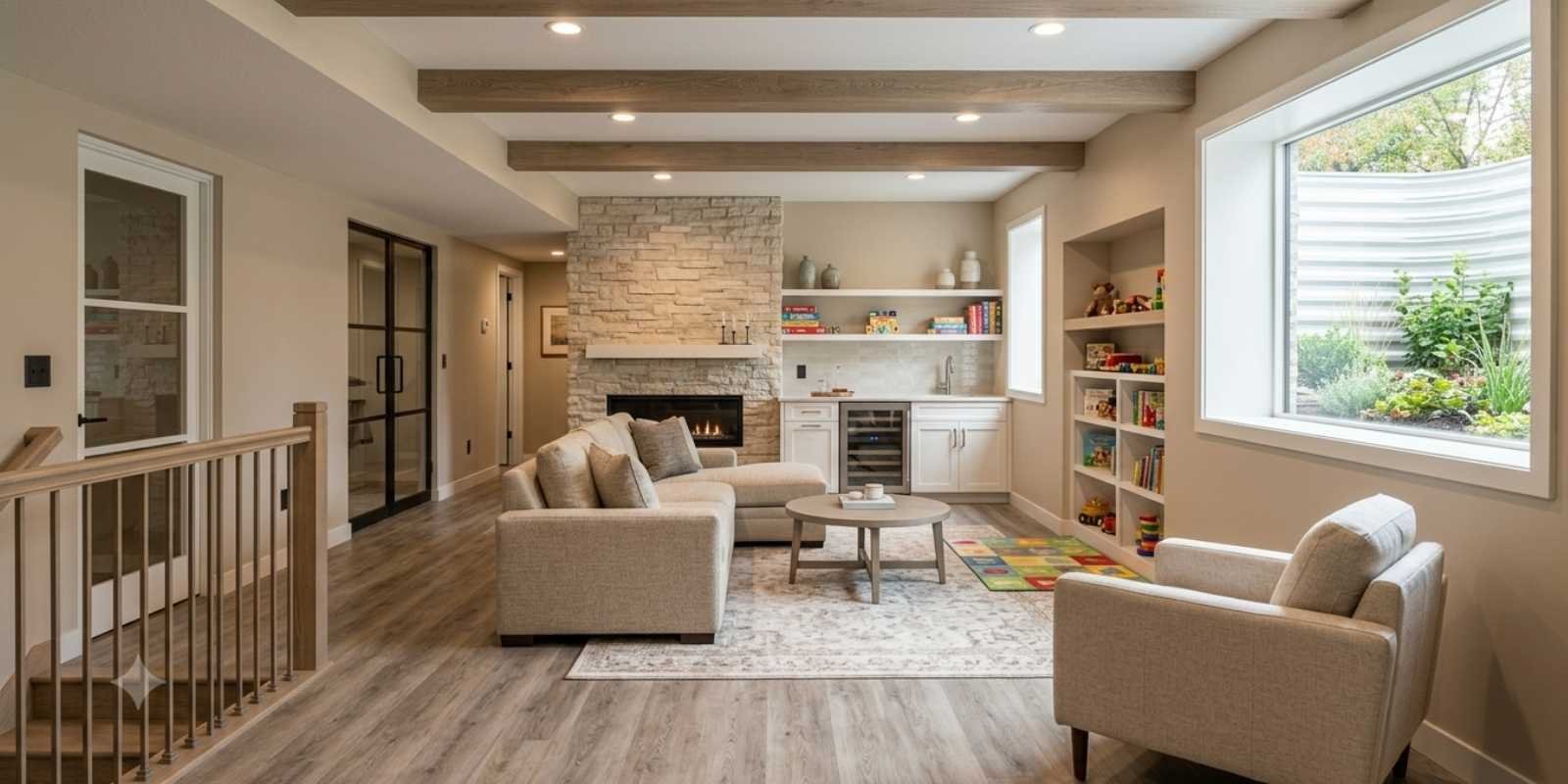
If your basement serves as a family gathering space, prioritize comfort, sound absorption, and style. Luxury vinyl plank (LVP) or carpet tiles work well in these areas. LVP provides a stylish wood-look finish with excellent moisture resistance and easy maintenance.
Carpet tiles add warmth and help soften sound, which is especially useful in multi-level homes where noise from below travels easily. Both options offer enough versatility to complement furniture and decor while providing practical benefits for daily use.
Home gym
Basements often double as fitness spaces, making rubber flooring an excellent choice. Its cushioned surface absorbs shock from workouts and protects subfloors from dropped equipment.
Rubber also resists moisture and provides traction, reducing the risk of slips during high-intensity training. Interlocking rubber tiles allow for easy customization and quick installation, making them a smart option for do-it-yourself renovators.
Utility or laundry room
For utility areas, focus on flooring that withstands water, detergents, and heavy traffic. Ceramic or porcelain tile offers outstanding durability and water resistance, making it a smart fit for laundry zones or storage areas. Epoxy-coated concrete also performs well here, creating a seamless, easy-to-clean surface that resists chemical spills and moisture penetration.
Tips for multi-use spaces
Many basements serve multiple functions, such as housing a home office, media center, and guest bedroom. Use a mix of flooring types to define zones and support different activities in these situations.
For example, install durable vinyl plank flooring throughout the space for consistency, then layer area rugs to create cozy, designated seating or sleeping areas. Use modular rubber mats in gym corners or play zones so you can easily remove or replace them when needed.
Finished vs. partially finished basements
A fully finished basement typically includes climate control, drywall, and moisture barriers, allowing for a wider variety of flooring options. Feel confident choosing engineered wood, vinyl planks, or even carpet tiles in these spaces.
In contrast, a partially finished basement might still have exposed concrete or limited insulation. Here, lean toward waterproof, durable options like sealed concrete, epoxy, or water-resistant tile. These materials offer reliability in less controlled environments while maintaining visual appeal.
Matching your basement flooring to its intended use extends the life of your investment and elevates the comfort and function of your home’s lower level. Always weigh durability, style, and practicality to find the best fit for your unique space.
CCS of Utah has your basement floors covered
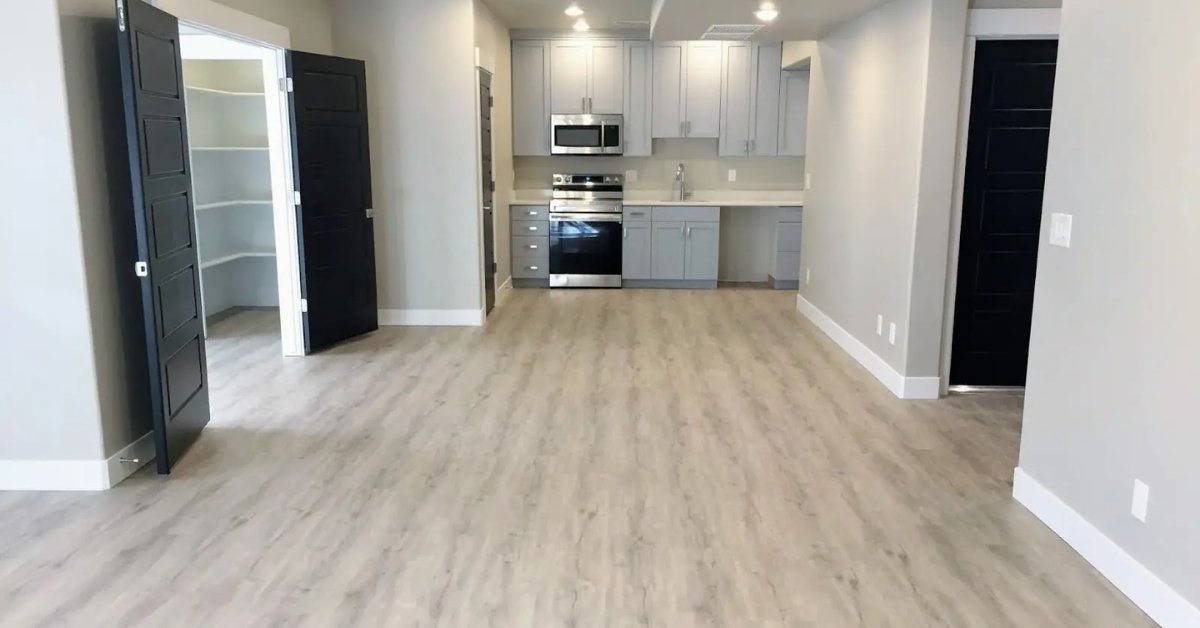
When you’re ready to bring your basement vision to life, partner with a team that understands every layer of the process, starting from the ground up. At CCS of Utah, we specialize in custom basement renovations, including expert flooring installation tailored to your needs.
Our team combines craftsmanship with practical experience to help you choose the best materials and ensure your new floors look stunning and stand the test of time.Reach out to CCS of Utah today, and let us help you create a finished basement that’s as functional as it is beautiful, starting with the perfect floor beneath your feet.