
Welcome to the exciting world of home theater rooms! In recent years, we’ve seen a surge in the popularity of these personal entertainment havens, especially as part of basement renovations.
The allure of having a cinema-like experience in the comfort of your own home is undeniable. Imagine settling into your cozy theater chair, surrounded by perfect sound, ideal lighting, and a screen that pulls you into another world — all this without stepping out of your house!
However, as thrilling as it is to add a theater room to your basement, it can have its challenges. There are common basement home theater mistakes that can turn your dream project into a less-than-stellar reality. We’ve put together this blog to help. From soundproofing to seating, we’ll cover the essential aspects to consider for a successful theater room addition.
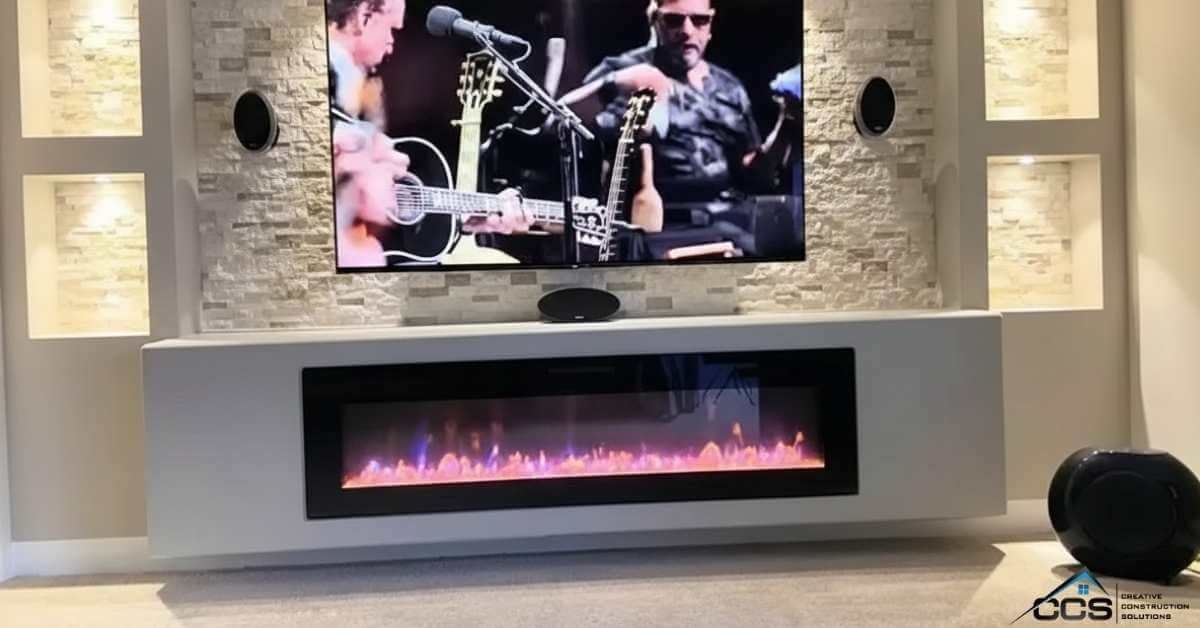
Mistake 1: Underestimating the importance of soundproofing
When creating the perfect home theater room in your basement, soundproofing should be at the top of your priority list. You’ll want soundproofing to keep sound from getting out or getting in.
A common oversight in soundproofing is the ceiling. It’s easy to forget that sound travels in all directions, and a non-soundproof ceiling can let noise seep in from upstairs. Similarly, doors are often overlooked. A standard interior door has gaps that can let sound escape and enter, which isn’t ideal in a theater setting.
When soundproofing your ceiling, use acoustic tiles or drywall designed for sound dampening. These materials are specifically engineered to absorb and block sound so your theater room remains a secluded haven of cinematic sound.
For doors, consider replacing your standard door with a solid-core option and adding weatherstripping around the frame.
Adding mass-loaded vinyl (MLV) to your walls can dramatically reduce sound transmission. For floors, especially if your theater room is not on the lowest level of your home, use carpeting with a thick pad underneath that can absorb sound effectively.
Mistake 2: Choosing the wrong screen size or type
Selecting the right screen for your basement theater room can make or break the entire experience. The size and type of screen you choose profoundly impact your viewing pleasure. Finding the right screen is about finding the perfect fit for your space and needs.
A common mistake is choosing a screen that’s either too large or too small for the room. So, how do you find that sweet spot? The key is to consider the dimensions of your room and the typical viewing distance.
A good rule of thumb is the “10 to 20 Rule.” The ideal screen size should be such that its diagonal is approximately half the distance between the screen and your primary seating area. For instance, if your seating is 10 feet away from the screen, a 60 to 120-inch diagonal screen size would be ideal.
Regarding the type of screen, you have options like LED, OLED, and projectors. Each has its pros and cons.
LED screens are bright and vibrant but might not offer the best black levels. OLED screens provide excellent contrast and black levels but can be pricier. On the other hand, projectors provide an authentic cinema experience and can be more forgiving with room size, but they require a darker room to shine.
Remember, the goal is to create a balanced and comfortable viewing environment. Don’t focus only on size or technology. Pay attention to how the screen fits into your overall theater room design and how it caters to your viewing habits.
Mistake 3: Skimping on quality audio equipment
Imagine watching an epic movie in your newly finished basement theater room, but the sound is flat, lifeless, or even crackling. This happens when you skimp on quality audio equipment in your home theater.
One common mistake is opting for inadequate or low-quality audio systems. Remember that poor audio will dampen the experience. An underpowered sound system might not fill the room; worse, it might distort at higher volumes. Similarly, a system without a wide range of sound will miss the subtle details in a movie’s soundtrack, dialogue, or sound design.
So, how do you choose the right audio equipment? First, consider the size of your theater room. Larger rooms require systems with more power to distribute sound evenly. For smaller rooms, you generally need less power. Look for systems that offer a clear, balanced sound and can handle a range of frequencies without distortion.
Next, think about the components of the sound system. A good home theater audio system typically includes a receiver, multiple speakers (including a center channel, left and right speakers, and surround speakers), and a subwoofer for those deep bass sounds.
The receiver is the heart of your system, so choose one that can handle the number of speakers you plan to use and has enough inputs for all your devices.
Lastly, consider the type of speakers. In-wall or in-ceiling speakers offer a sleek, unobtrusive look, while freestanding speakers make more of a statement and sometimes offer superior sound quality. The choice depends on your aesthetic preferences, sound quality expectations, and the quality of the speakers.
Mistake 4: Inadequate seating arrangements
Good seating is an integral part of a good theater. When making your basement theater, your goal should be no bad seats in the house.
One of the most common seating mistakes is overcrowding the space. It’s understandable to want to accommodate as many friends and family as possible, but too many seats may make the room feel cramped and uncomfortable. Additionally, overcrowding often leads to poor line-of-sight for some viewers.
To avoid these pitfalls, here are some tips for optimal seating layout and furniture choices:
- Measure Your Space: Before purchasing any seating, measure your room. Check that there’s enough space between rows for people to move comfortably, and consider the distance from the screen for optimal viewing.
- Tiered Seating: If space allows, tiered seating is a fantastic way to ensure everyone has an unobstructed view. You can accomplish this by putting back rows on raised platforms.
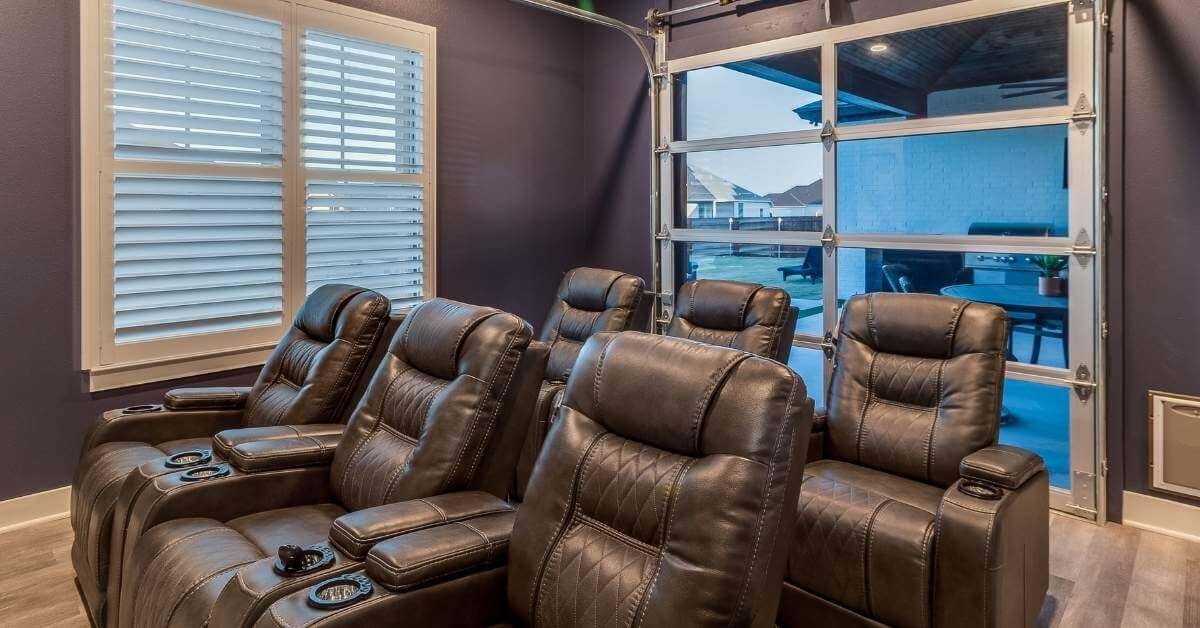
- Choose the Right Seats: Look for theater-style seating or recliners that offer comfort for extended viewing. Features like cup holders, adjustable headrests, and storage compartments add convenience.
- Viewing Angle and Distance: Position seats so the screen is at eye level. The ideal viewing distance depends on your screen size; a general guideline is 1.5 to 2.5 times the diagonal length of your screen.
- Flexible Seating Options: Consider adding a few bean bags or floor cushions. They’re great for kids and can be easily moved around, offering flexibility in your seating arrangement.
- Aesthetic and Functionality: Your seats should not only be comfortable but also complement the overall design of your theater room. Choose colors and materials that match your style and the room’s acoustics.
Mistake 5: Not Planning for Future Upgrades
With new technology coming out every day, what’s cutting-edge today might become outdated tomorrow. The key to a timeless home theater is its current state-of-the-art setup and its ability to adapt and evolve with future technological advancements.
A common mistake in home theater design is not leaving room for future upgrades. Technology is constantly advancing, and your theater room should be able to accommodate these changes without requiring a complete overhaul.
Here are some ways to ensure your theater room is future-proof:
- Flexible Wiring Infrastructure: Opt for a wiring system that can easily be updated or expanded. Running extra conduits and using accessible wiring panels will save you from major renovations when upgrading your equipment.
- Modular Design Elements: Choose design elements that can be easily modified or replaced. For instance, removable panels for speakers or projectors make it easier to upgrade without disturbing the whole room.
- Scalable Audio-Visual Systems: Invest in A/V systems that are scalable. This means choosing components that can work well with future additions or upgrades, whether it’s a new sound format or a higher-resolution projector.
- Smart Home Integration: Consider integrating your theater room with a smart home system. Doing this adds a layer of convenience and ensures that your theater room can adapt to new technologies in home automation.
- Space for New Technologies: Leave some room in your design for emerging technologies. Whether you add a new sound system or virtual reality equipment, having some flexible space can be invaluable.
- Consult with Experts: Technology is ever-changing. Consulting with home theater experts will provide insights into current trends and future possibilities, helping you make informed decisions.
Avoid Basement Home Theater Mistakes with Creative Construction Solutions
Now that you know what mistakes to avoid, it’s time to find the company to bring your home theater dreams to life.
At Creative Construction Solutions, we are passionate about transforming basements into dynamic and enjoyable spaces. Our basement renovations expertise, a keen eye for detail, and 28 years of experience ensure that your theater room will be a perfect blend of functionality, style, and technology.
Don’t let the complexities of theater room additions hold you back. Contact Creative Construction Solutions today to start your home’s transformation.