
A finished basement expands your usable square footage and adds versatility and functionality to your home. There’s no question that it’s a good investment for many homeowners.
But you may still be asking the question, “How much value will finishing my basement add to my home?” While you might want to finish a basement for your own use, it can provide long-term benefits you should also know about.
In this comprehensive guide, we’ll explore the various factors that influence the added value, providing insights into the financial implications, regional variations, and long-term gains associated with this exciting home improvement endeavor.
Whether you’re planning to sell in the near future or simply want to maximize your living space and enjoyment, understanding the potential return on investment is paramount. So, let’s delve into the world of finishing a basement and uncover the secrets to a more valuable and versatile home.
The Baseline Value
When contemplating the value a finished basement could add to your home, it’s imperative to start by assessing your home’s current worth. This process involves understanding the factors that determine your home’s value and establishing a baseline for future comparison.
Furthermore, it’s crucial to acknowledge how your property’s location and the surrounding neighborhood can significantly impact its overall value.
To determine your home’s current value before deciding to finish a basement, consider two primary approaches:
- Appraisals: Hiring a professional appraiser provides an accurate assessment of your home’s value. Appraisers consider factors such as your home’s size, condition, and features, recent sales of similar properties in your area (comps), and current market conditions. This method offers a precise valuation but comes at a cost.
- Market Analysis: Conducting a market analysis involves researching recent sales of comparable properties in your neighborhood. Online real estate databases, local real estate agents, and public property records are valuable resources for this purpose. While not as precise as an appraisal, a well-researched market analysis can provide a good estimate of your home’s value.
Establishing a Baseline for Comparison
After determining your home’s current value, you’ve established a baseline against which you can measure any increase in value resulting from finishing a basement.
This baseline is critical for gauging your remodeling project’s return on investment (ROI). As you invest in basement finishing, you’ll want to see an increase in your property’s value that exceeds the project’s cost.
Factors Influencing How Much Value Will Finishing My Basement Add to My Home
When considering how the decision to finish a basement can impact your home’s value, several key factors come into play, including the size and layout of your basement, the quality of the finishes and materials, functionality and purpose, the return on investment, and national averages and regional variations. Let’s take a closer look.
Size and Layout of Your Basement
- Square Footage and Usable Space: The size of your basement is a crucial determinant of added value. The more square footage you have, the greater potential for added value. However, it’s not just about the total area; it’s also about how effectively that space is utilized. An open and well-planned layout can maximize the perceived size and functionality of the basement, making it more appealing to potential buyers. No one wants a tiny, cramped space with limited options for use.
- Ceiling Height: A basement with a higher ceiling height often feels more spacious and desirable. Basements with low ceilings may have limited appeal and could yield lower returns on investment.
- Natural Light and Egress: Basements with access to natural light, such as through windows or walk-out basements, are generally more valuable. Adequate egress escapes, including emergency exits or windows that meet safety codes, are essential for safety and compliance with building regulations.
Quality of Finishes and Materials
- Premium vs. Budget Options: The choice of finishes and materials can significantly affect added value. High-quality materials, such as hardwood floors, granite countertops, and premium fixtures, can command a higher price point. However, it’s essential to strike a balance between quality and budget to ensure a positive return on your investment.
- Craftsmanship: The skill and craftsmanship of the contractors you hire can impact the perceived quality of the finished basement. Poorly executed work can detract from the added value, while expert craftsmanship can enhance it.
Functionality and Purpose
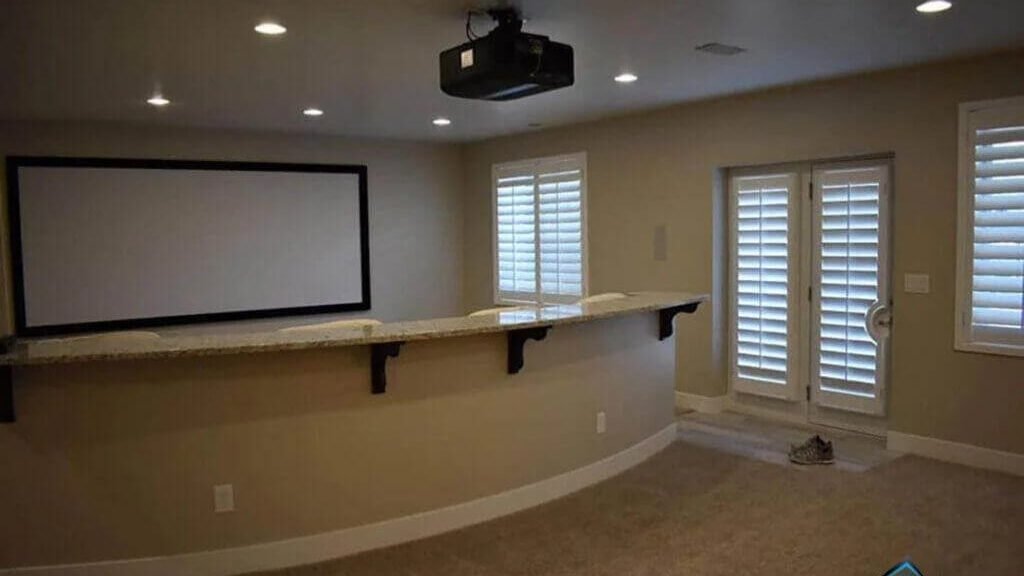
- Versatile Spaces vs. Specialized Rooms: Consider whether your basement design is versatile or tailored to a specific purpose. Versatile spaces, like open living areas, are more adaptable to the diverse needs of potential buyers. Specialized rooms, such as a home theater or gym, may cater to niche preferences, potentially limiting the pool of interested buyers.
- Additional Bedrooms and Bathrooms: Adding bedrooms and bathrooms to your basement can substantially increase its value. These spaces are highly sought after and can make your home more appealing to families or those looking for guest accommodations.
- Storage and Utility Space: Adequate storage space, such as closets and storage rooms, can be a valuable addition. Utility areas, like a laundry room or pantry, enhance functionality and convenience.
Return on Investment
Understanding the return on investment (ROI) in basement refinishing is essential to gauge the financial impact of your remodeling project. Here’s a breakdown of key aspects to consider:
- The Concept of Cost Recoupment: ROI represents the ratio between the cost of your basement finishing project and the increase in your home’s value. It’s typically expressed as a percentage. For example, if you spend $40,000 on finishing your basement, adding $60,000 to your home’s value, your ROI is 50%.
- Factors Affecting ROI: Several factors influence the ROI of basement finishing, including the quality of work, the materials used, market conditions, and location. A well-executed project with high-quality finishes is likely to yield a better ROI.
National Averages and Regional Variations
- Comparing ROI Nationally: National averages can provide a rough benchmark for assessing your basement finishing project’s ROI. According to industry data, basement finishing typically offers an ROI ranging from 70 to 75%. However, these figures can vary significantly based on your location and specific circumstances.
- Regional Variations: ROI can vary widely from region to region. You may achieve an ROI above the national average in areas with substantial real estate markets and high demand for finished basements. Conversely, ROI might be lower in areas with a sluggish housing market. Consider consulting local real estate professionals to assess regional variations more accurately.
Long-Term vs. Short-Term Gains
- Immediate Benefits vs. Appreciation Over Time: The ROI of basement finishing can be both immediate and long-term. Immediate benefits include increased living space, improved functionality, and enhanced quality of life. These are non-monetary gains that contribute to your overall satisfaction with your home.
- Appreciation Over Time: A well-finished basement can contribute to your home’s appreciation over the long term. Real estate tends to appreciate over time, and improvements like a finished basement can accelerate this process. Viewing your basement finishing project as an investment that pays dividends over the years, not just a short-term gain, is essential.
Finish Your Basement With CCS of Utah
If you’re eager to unlock your basement’s untapped potential and enhance your home’s value, it’s time to take the first step. Finishing a basement is an exciting project that will increase your home’s value and provide you with more living space.
Get started by contacting CCS of Utah, your trusted partner in finishing a basement. Our experienced team is ready to bring your vision to life, providing expert guidance and top-notch craftsmanship. Don’t miss out on the opportunity to create a more valuable and versatile living space.
Reach out to CCS of Utah today at 801.318.0242, and let’s get started on your basement finishing journey