
Finishing a basement in Lehi entails adhering to the local building department’s specific guidelines. For any space used as a bedroom, basement finishing building code in Lehi addresses ceiling height, egress windows, electrical, plumbing, insulation, and framing. There may be delays because many homeowners don’t start researching code requirements until after design plans have been completed.
Early understanding of these standards helps prevent costly rework, permit delays, and failed inspections. Your finished basement will be safe, code-compliant, and long-lasting if you work with a basement finishing contractor in Lehi who is familiar with the city’s permitting process.
Understanding the basement finishing cost early in the planning process can help homeowners budget for permits, materials, inspections, and potential code-related upgrades.
What Is Basement Finishing Building Code In Lehi, Utah
Building codes establish minimum safety standards for residential construction, and finishing a basement is no different. Basement finishing building code Lehi is built on Utah’s International Residential Code (IRC), which has city-specific local modifications. These regulations are in place for three main purposes: insurance protection, resale value, and safety.
The Lehi building code usually covers the following for finished basements:
Electrical
Circuit protection, panel capacity, and outlet positioning
Egress
Sleeping rooms must have windows.
Framing
Appropriate stud spacing and requirements for load-bearing walls
Insulation
Below-grade wall insulation ratings.
Plumbing
Rough-in placement for wet bars or bathrooms.
Your family will be safer, and your basement will be easier to sell when you’re ready to move out if it complies with the Utah building code.
Permit Requirements For Basement Finishing In Lehi
A permit is often needed in Lehi before any work can start on basement finishing projects. It is usually required for structural modifications, new electrical circuits, plumbing extensions, and egress window installations, although it may not be required for painting walls or replacing flooring.
If you’re asking, do I need permit for basement finishing, the answer is yes for most Lehi projects involving framing, electrical, plumbing, HVAC, or structural work.
The following are usually required in order to apply for a Lehi building permit:
- Detailed floor plans that show the proposed layout
- Plumbing, electrical, and framing drawings
- Details about the contractor’s license (if hiring a licensed contractor)
- The completed permit application was sent to the Lehi building department
Once submitted, inspections are scheduled at key phases such as rough framing, electrical rough-in, insulation, and final walkthroughs. Before work may proceed, each step must be completed. Steps you skip can drastically reset your timeframe.
Basement permit Utah is more than simply red tape; it’s proof that the work was completed correctly.
Egress Window Requirements
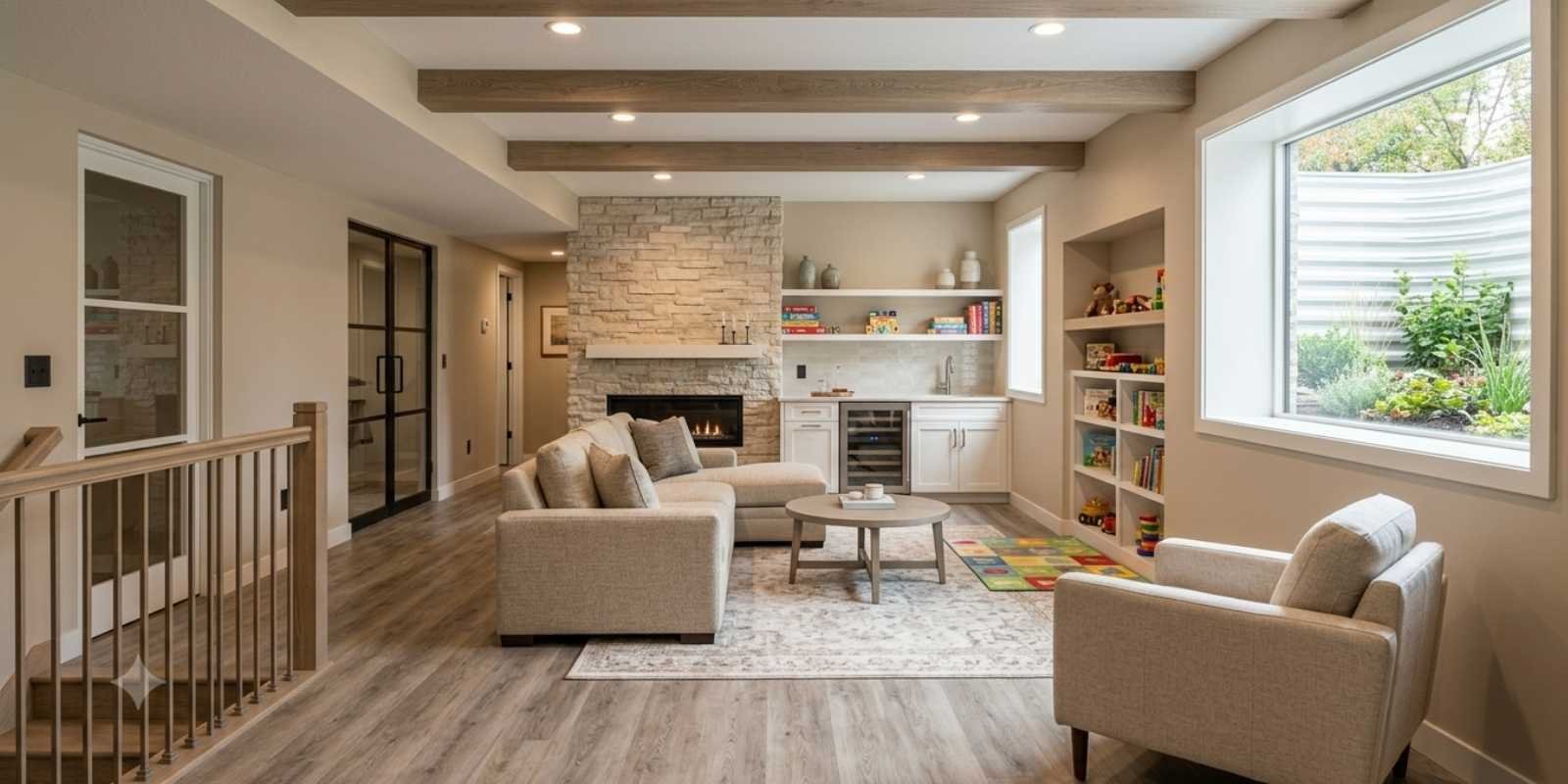
Under the egress window code, egress windows are a must if you’re planning a bedroom in the basement. Every room that is meant to be used for sleeping needs to have a window that can be used to escape in an emergency.
Utah homeowners must adhere to the following egress window requirements Utah:
- Net clear opening area of 5.7 square feet or more
- Minimum of 24 inches in height
- Minimum of 20 inches in width
- Maximum height of the sill from the floor is 44 inches
- Window well dimensions if the window is below grade
Egress windows must be able to be adjusted without the need for tools or expertise, according to the basement bedroom code. Egress placement should be considered early in the layout process to avoid costly structural modifications later.
Ceiling Height And Framing Standards
One of the first things inspectors look at is the height of the ceiling. The minimum clearance required for habitable rooms under the basement ceiling height code is typically 7 feet, bathroom stalls and hallways may be permitted to be somewhat lower. It is necessary to carefully plan around mechanical equipment, ducts, and beams that fall below the necessary height.
For framing, a framing inspection Lehi usually looks for:
- Stud spacing is usually 16 inches in the middle
- Proper header sizes for windows and doors
- Wall cavity blocking and fire suppression
- Connections to pre-existing masonry or concrete walls
Older Lehi homes frequently have low-clearance basements with overhead ductwork. Time and money can be saved during the inspection process by resolving these layout issues before walls are built.
Insulation, Electrical, And Plumbing Code Basics
In finished basements, the three mechanical systems that generate the most inspection activity are plumbing, electrical, and insulation.
Basement Plumbing Code
Rough-in location, drain size, ventilation, and access panels are all subject to the basement plumbing code. Before walls are closed, plumbing work needs to be inspected, whether you’re building a full wet bar or a half bath.
Basement Electrical Code
Lehi’s basement electrical code requires the following:
- Outlets in living spaces should be no more than 12 feet apart
- GFCI protection in moist areas and bathrooms
- AFCI protection for circuits in bedrooms
- Circuits specifically designed for big appliances
Basement Insulation Code
Utah’s basement insulation code mandates that exterior walls below grade be insulated to a minimum R-value. Batt insulation or continuous rigid foam are popular methods for framed walls. Concrete usually needs vapor barriers as well.
What Happens If You Skip The Permit Process
Unpermitted basement finishing may seem like a quick fix, but the consequences might last for years.
Ignoring the permit process involves the following risks:
- Stop-work orders that interrupt construction in the middle of a project
- Fines for breaking the city’s code
- Demolition of finished work is necessary for inspection access
- Issues that arise during a house inspection when selling
- Rejecting insurance claims if damage happens in an area that isn’t authorized
Code violation basement may also make selling your house more difficult. Unpermitted living spaces are frequently flagged by buyers’ agents and lenders, and you could have to go through the costly and time-consuming process of retroactive permitting instead of completing it correctly the first time.
How A Licensed Contractor Helps With Code Compliance
Most of the uncertainty in the permitting process can be avoided by working with a licensed basement contractor Lehi. Local contractors like CCS of Utah are already familiar with Lehi’s specific state code changes, which subcontractors’ inspectors prefer, and how to effectively schedule inspections.
Hiring a code-compliant basement finishing contractor has several advantages:
- Prepare and submit permit applications on your behalf
- Organizing inspections for insulation, plumbing, electrical, and framing
- Skilful management of inspection remarks and adjustments
- Long-term responsibility for the quality of work
Contractors who manage in-house trades, compared to managing several subcontractors, typically pass inspections more quickly. Delays are reduced when there are fewer communication gaps. The final outcome is a completed basement that adds to the value of your house rather than creating future issues.
Experienced contractors can also help homeowners determine whether basement finishing HOA approval is required by their community association.
Frequently Asked Questions
What building codes apply to basement finishing in Lehi, Utah?
Lehi enforces the currently adopted International Residential Code alongside specific Utah state amendments. These strict guidelines govern structural framing, safe electrical wiring, proper insulation, plumbing, and emergency egress safety. Compliance ensures your newly completed lower level is completely safe and legally sound.
Do I need a permit to finish my basement in Lehi?
Yes, local homeowners must secure an official building permit before starting any structural construction. The city requires structural, electrical, and plumbing inspections at various stages of your project. Obtaining proper documentation protects your property value and ensures structural integrity.
Are egress windows required in every basement?
Utah building codes mandate emergency escape openings in every room designated for sleeping. Large common areas and modern bathrooms generally do not require these specialized exit windows. Installing proper egress routes remains crucial for family safety and legal code compliance. Egress windows are required in any basement room used as a bedroom or sleeping area. Common areas, hallways, and bathrooms do not require egress windows.
What is the minimum ceiling height for a finished basement?
Habitable living spaces require a finished ceiling height of at least 7 feet. Local building regulations do allow slightly lower clearances in hallways and bathrooms. Girders, beams, and heating ducts can project below this height under specific conditions.
Can I finish my basement without a permit in Lehi?
Proceeding without official city approval can result in costly stop-work orders and severe financial penalties. Unpermitted construction often creates major complications with your homeowner’s insurance policy coverage. Furthermore, undocumented work complicates the future resale process of your Utah home.
“Planning a basement finishing project in Lehi? Contact a licensed local contractor who handles permits and code compliance from start to finish.”