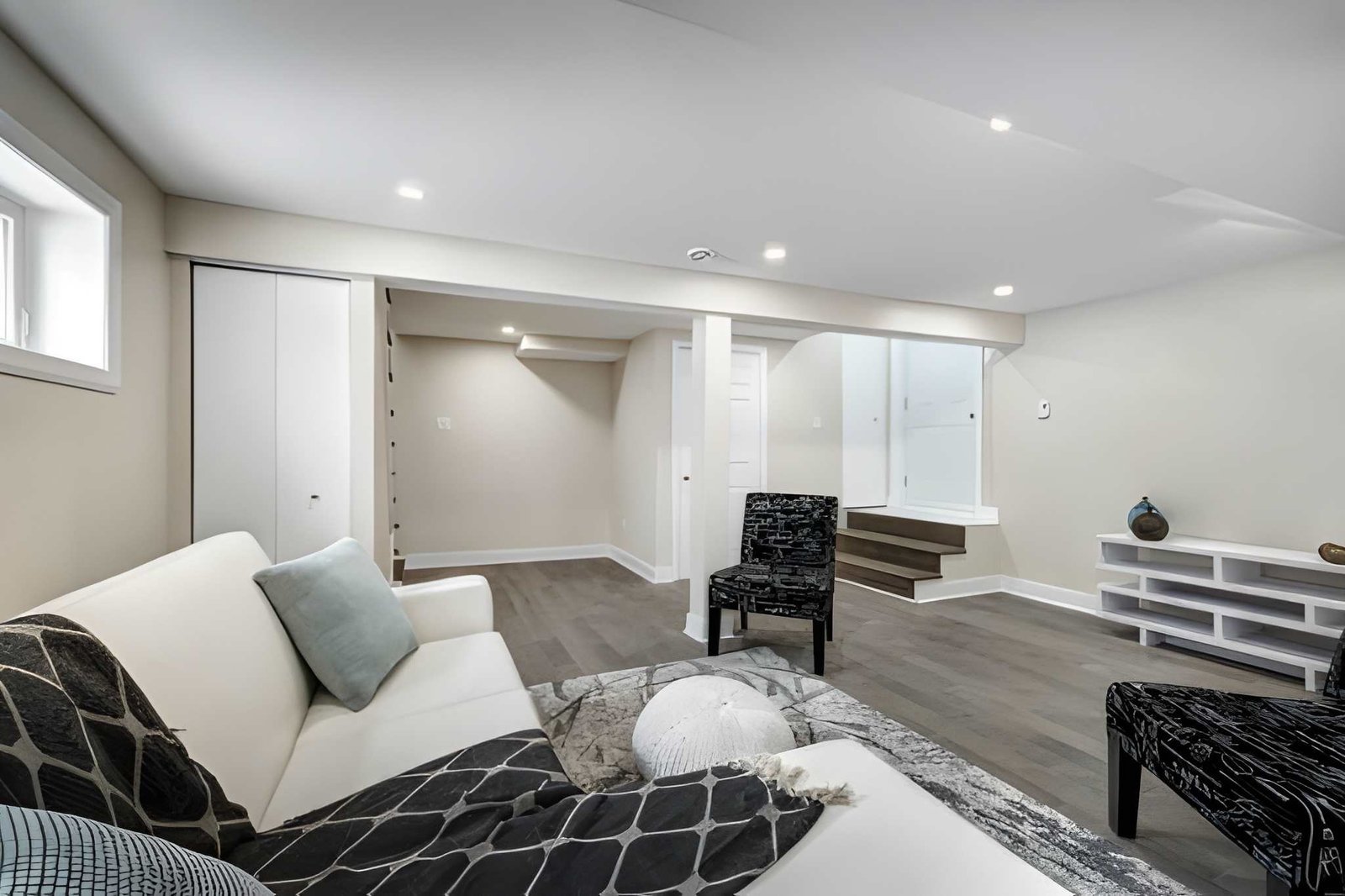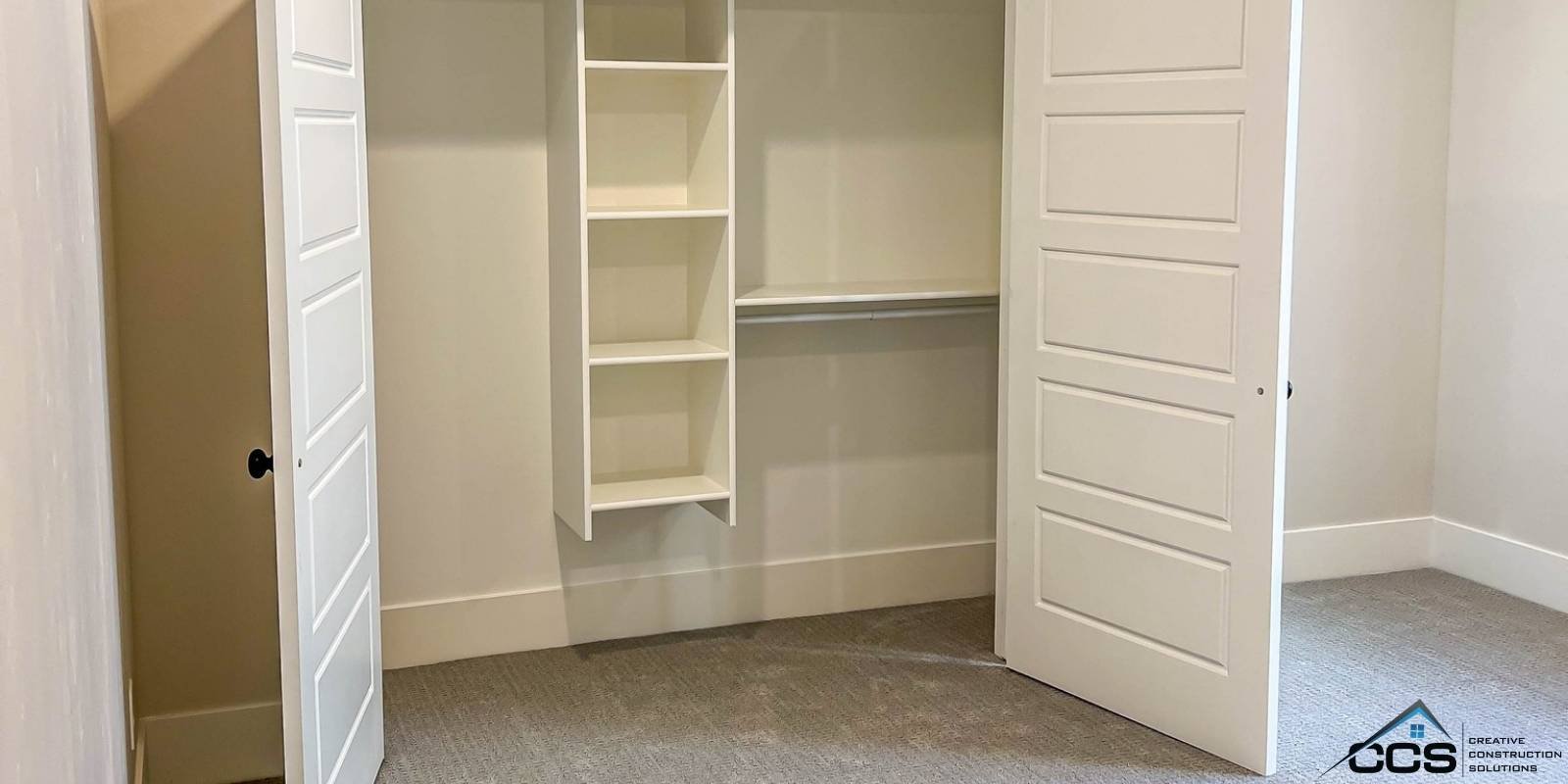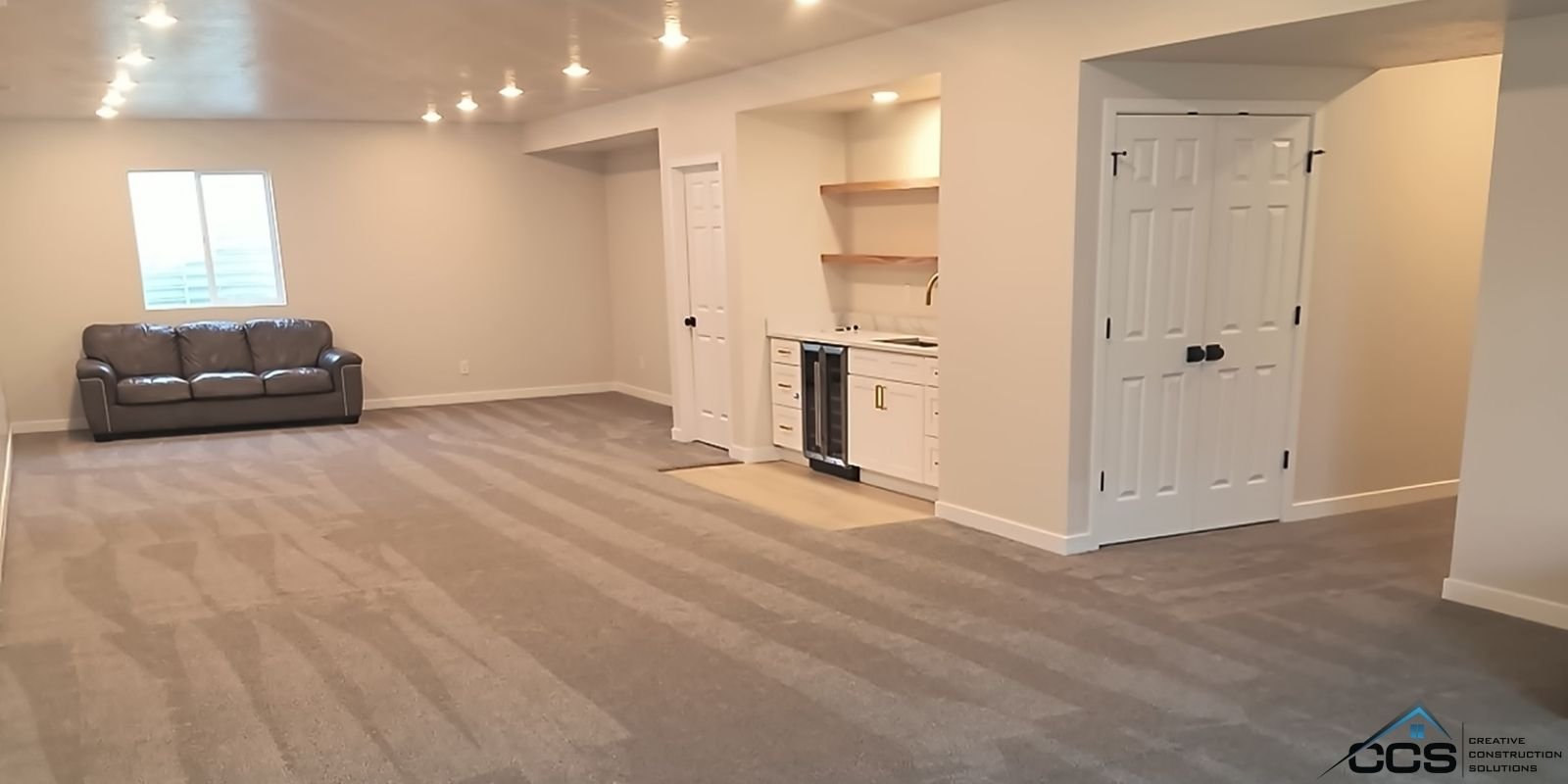
If you own a home in Alpine, chances are you have an unfinished basement sitting right beneath your feet. Homes in this part of Utah County were built with generous footprints — large lots, spacious layouts, and full basements that often go untouched for years. That means you already own the square footage. You just haven’t turned it into a functional living area yet. Understanding the basement remodeling cost in Alpine, Utah is the first step toward transforming that space into something practical, comfortable, and valuable for your home.
Finishing your basement is one of the best investments an Alpine homeowner can make. You add livable square footage, increase your home’s value, and create space your family will use every day. But the cost varies significantly depending on what you want to build, how large your basement is, and who you hire to do the work.
This guide gives you real numbers for the Alpine market in 2026. It covers every major cost factor, what to watch out for in this specific community, and how to make a smart decision for your home.
Key Takeaways
- Most Alpine homeowners spend $28,000–$70,000 to finish a basement in 2026.
- The typical cost ranges from $42–$68 per square foot, depending on finish level and features.
- Adding a bathroom is the single biggest cost driver, adding $10,000–$20,000 to your project.
- Utah law requires egress windows in any basement bedroom. Each one costs $2,500–$5,000 to install.
- Radon testing is strongly recommended before you start. Mitigation costs $800–$1,500 if needed.
- All basement finishing work requires a permit in Alpine. The City’s Building Department enforces this without exception.
- Alpine has a formal Accessory Apartment Ordinance — basement rentals are allowed but require registration and annual renewal.
2026 Basement Remodeling Cost Overview for Alpine
Alpine sits in one of Utah County’s most desirable residential pockets — a small-town feel tucked against the Wasatch foothills, with access to American Fork Canyon, excellent schools, and some of the highest home values in the county. The average home value in Alpine in 2026 is over $1,000,000. That premium real estate context matters when you’re budgeting a basement finish, because the labor market here reflects it.
Skilled contractors in Utah County are in steady demand. Alpine homeowners competing for the same pool of licensed framers, electricians, and plumbers as neighboring communities in American Fork, Cedar Hills, and Highland. That consistent demand keeps labor rates slightly above national averages and reinforces why getting quotes early — and budgeting accurately — is so important.
Here is what homeowners are spending in 2026:
| FINISH LEVEL | COST PER SQ FT | TYPICAL TOTAL (1,000 SQ.FT.) | WHAT IS INCLUDED |
|---|---|---|---|
| Basic Finish | $30–$42 | $30,000–$42,000 | Framing, drywall, paint, flooring, basic lighting |
| Mid-Range Finish | $42–$58 | $42,000–$58,000 | Above plus upgraded flooring, recessed lighting, one bathroom |
| High-End Finish | $58–$82+ | $58,000–$82,000+ | Custom layout, full bathroom, wet bar or kitchenette, built-ins |
| ADU or Rental Suite | $70–$100+ | $70,000–$100,000+ | Full kitchen, separate entrance, code-compliant rental suite |
These ranges include labor, materials, and permits. They do not include furniture or appliances.
The most common Alpine basement project is a mid-range finish that includes an open living area, one full bathroom, and one or two bedrooms. Most of these projects land between $42,000 and $62,000 for a 1,000–1,200 square foot basement.
What Makes Basement Remodeling Different in Alpine
National cost guides are built on averages from across the country. Alpine has several local factors that push costs above those numbers — and a few unique community characteristics that shape how projects get planned and permitted.
Large Homes, Large Basements
Alpine homes tend to be spacious. Many were built in the 1990s through 2010s with full basement footprints of 1,200 to 2,000 square feet. That is more floor space than many contractors elsewhere are accustomed to finishing in a single project. The larger the basement, the more labor hours, materials, and planning time are involved. If your basement is on the larger end, expect your total cost to scale accordingly even if your per-square-foot rate stays in the mid-range.
Foothills Soil Conditions
Alpine sits at a higher elevation along the Wasatch front, with more exposure to rocky, varied soil conditions compared to valley-floor communities. In some areas, expansion and contraction from seasonal moisture cycles can put pressure on foundation walls over time. A thorough contractor will inspect for any signs of settling, moisture intrusion, or wall movement before framing goes up. Addressing foundation concerns before you finish is always less expensive than addressing them after the walls are closed.
Radon Awareness in Utah County
Utah County, including Alpine, has documented elevated radon levels in many homes. Radon is a naturally occurring gas that seeps up through the soil and can accumulate in enclosed spaces. It has no smell and no color, but long-term exposure is the second leading cause of lung cancer in the United States.
Test your basement before you start any finishing work. A test kit costs $10–$25 at any local hardware store. If levels measure at or above 4.0 picocuries per liter — the EPA’s action threshold — install a radon mitigation system before the walls go up. The system typically costs $800–$1,500 installed and is far simpler and cheaper to put in place before a basement is finished than after. Most reputable Alpine contractors will either perform the test themselves or strongly encourage you to complete one before construction begins.
Utah Building Code Requirements
Alpine follows Utah’s statewide residential building code, based on the International Residential Code (IRC) with state-specific amendments. For basement finishing, this means clear requirements that add to the project cost but protect your family and your investment. Required elements include egress windows in any sleeping room, minimum ceiling heights of 7 feet in all habitable spaces, proper insulation for Utah County’s cold winters, AFCI (Arc-Fault Circuit Interrupter) protection on nearly all basement circuits, and interconnected smoke and carbon monoxide detectors on every level.
Room-by-Room Cost Breakdown
The most useful way to understand basement costs is to look at each space individually.
Open Living Area or Rec Room
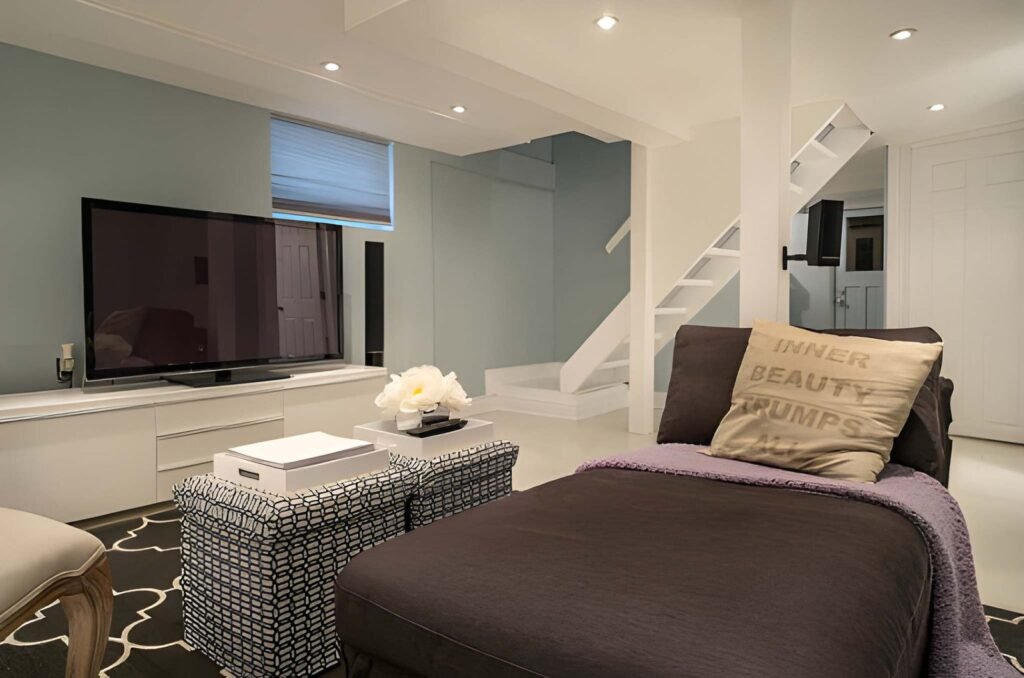
An open layout with framing, drywall, flooring, and basic lighting typically costs $25–$42 per square foot. For a 600 square foot open rec room, expect to pay $15,000–$25,000. This is the most affordable basement option because it avoids complex plumbing and minimizes interior wall framing. It is also the most popular starting point for Alpine families who want more flexible gathering space.
Basement Bedroom
In Alpine, Utah law requires any basement bedroom to have an egress window — a full-size opening in the foundation wall for emergency exit or entry. Without it, the space cannot legally be called a bedroom, and appraisers won’t count it as one.
Installing an egress window costs $2,500–$5,000, covering the wall cut, window well, drainage, and inspection. Adding framing, drywall, flooring, a closet, and a door brings the total for a basement bedroom to $8,000–$15,000 beyond the base finish.
Utah code requires at least 5.7 sq. ft. of clear opening, 24 inches tall, 20 inches wide, with the sill no higher than 44 inches from the floor.
Basement Bathroom
A basement bathroom is the most expensive upgrade because drain lines must be cut into the concrete slab. A half bath (toilet and sink) costs $6,000–$10,000, while a full bath with shower or tub runs $10,000–$20,000. Final costs depend on finishes and drain line distance. If rough-in plumbing is already in place, expenses drop significantly.
Home Office
Dedicated home offices are among the most popular basement additions in Alpine right now, particularly for remote workers who want a quiet, separated workspace. A basement office does not require an egress window unless you plan to sleep in it. A finished office with proper lighting, adequate outlets, and built-in shelving typically costs $10,000–$20,000 depending on size and features.
Home Theater
A home theater involves more electrical work than a standard room. You need dedicated circuits for equipment, pre-wiring for speakers, multiple lighting zones, and sometimes acoustic treatment in the walls. Most Alpine homeowners spend $15,000–$35,000 on a dedicated theater space, depending on how much built-in equipment is included and how elaborate the finishing becomes.
Wet Bar or Kitchenette
Adding a wet bar with a sink, mini fridge, and countertop runs $5,000–$15,000. A full kitchenette with a stove and cabinetry costs more and may require additional permit considerations. If you are building a legal accessory apartment (see the Alpine-specific section below), a full kitchen adds $15,000–$30,000 to the project at typical finish levels.
Gym or Workout Room
A home gym is one of the simpler additions. Most gyms use rubber flooring, basic or recessed lighting, and mirrors. There is no plumbing involved unless you add an adjacent bathroom. A dedicated gym typically costs $8,000–$18,000 depending on size, ceiling height, and finishes.
What Affects Your Final Price
Several factors influence your final price, and each one plays a key role in determining the total basement remodeling cost in Alpine Utah for your project.
Basement Size
Materials and labor scale directly with square footage. Many Alpine homes have basements in the 1,200 to 1,800 square foot range. A 1,000 square foot mid-range finish runs roughly $42,000–$58,000. That same finish in a 1,500 square foot basement runs $63,000–$87,000. Know your exact footprint before you request contractor quotes.
Ceiling Height
Most Alpine homes built after the 1990s have 8–9 ft basement ceilings, which meet code comfortably. Older homes may have ceilings under 7 ft, but Utah requires at least 7 ft of clear height in habitable spaces. Fixing this means lowering the floor, a $10,000–$30,000 structural job. Beams, girders, and ductwork can project to 6 ft 4 in if spaced 4 ft apart.
Existing Rough-In Plumbing
Many newer Alpine homes were built with rough-in drain lines already stubbed out beneath the slab. If yours has them, adding a bathroom is significantly less expensive because the most labor-intensive part of the plumbing work is already done. If your home does not have rough-ins, plan for an additional $2,000–$5,000 to cut and run new drain lines for a basement bathroom.
Flooring Choice
Basement flooring is one of the biggest visual decisions and one of the largest cost variables in any basement:
- Carpet: $3–$7 per square foot installed. Affordable and comfortable for bedrooms and living areas.
- Luxury Vinyl Plank (LVP): $5–$10 per square foot installed. Handles moisture well and is the most popular choice in Utah basements right now.
- Tile: $10–$20 per square foot installed. Best for bathrooms and laundry areas.
- Engineered Hardwood: $10–$20 per square foot installed. Attractive, but requires careful moisture management in below-grade spaces.
Ceiling Type
You have two practical options. A drop ceiling uses removable tiles on a grid system, costs $3–$5 per square foot, and gives easy access to pipes and wiring above. A drywall ceiling costs $6–$9 per square foot, looks cleaner, and raises perceived ceiling height visually — but makes accessing plumbing or electrical later more difficult.
Lighting
Basements rely entirely on artificial light. A well-planned lighting layout makes the space feel open and inviting rather than dark and confined. Recessed lighting is the most popular choice in Alpine basements. A full lighting plan with recessed fixtures, dimmers, and all associated electrical work typically adds $3,000–$8,000 to a project.
Prior Unpermitted Work
This is one of the most common surprise costs in any Utah basement. Some homes were partially finished by a previous owner without permits. When you hire a licensed contractor to complete or remodel that space, they are legally required to bring everything up to current code. That may mean tearing out walls or rewiring electrical that was done incorrectly. Always ask your contractor to check for unpermitted work during the initial walkthrough — it protects your budget and your timeline.
Alpine-Specific Considerations
The Alpine Accessory Apartment Program
Alpine’s Accessory Apartment Ordinance allows homeowners to legally rent basement units. The process is straightforward: finish the space, register with the City at 801-756-6347, pass inspection, and pay a $101 fee. Annual renewal is $50, or less with the Good Landlord Program. Importantly, owner occupancy is required — you must live in the main home, and renting without registration can lead to fines.
A legal basement apartment can earn $1,200–$1,800 per month, often covering remodel costs in 5–8 years. To qualify, the unit must meet building codes for egress, ceiling height, kitchen, and fire separation. Creating an accessory apartment-ready basement typically costs $70,000–$100,000+, depending on finishes.
Home Value Context
With Alpine home values topping $1M, finished basements are a major factor in sales. Buyers expect them, and an unfinished space can hurt negotiations. A well-done basement adds livable square footage, meets buyer expectations, and typically returns 65–75% of its cost in added value.
Family-Oriented Layout Demand
Alpine is known as one of Utah County’s most family-oriented communities, with large households, multigenerational living, and strong community ties. This directly shapes basement planning, where families often request extra bedrooms, study areas, gyms, or guest suites.
The key step is identifying what your household truly needs before starting — tailoring the basement to your lifestyle ensures the investment adds lasting value.
Permits and Building Code Requirements
Every basement finishing project in Alpine requires a permit. The City Building Department makes it clear: all improvements, including framing, electrical, plumbing, HVAC changes, and egress windows, must be permitted.
Applications need two copies of a scaled site plan (minimum 1 inch = 20 feet) and two copies of building plans. Incomplete submissions are returned, delaying the start. Standard residential permits usually take up to ten business days to process, though timing depends on project complexity and volume.
For an 800–1,000 sq. ft. basement with a bathroom and basic electrical, permits typically cost $900–$1,500, covering plan review and inspections. Multiple inspections occur at framing, rough electrical/plumbing, insulation, and final completion, all of which must meet Alpine and Utah code standards.
Permits should always be pulled by your licensed contractor. If they suggest you do it yourself or skip permits, that’s a red flag. To contact Alpine’s Building Department, call 801-756-6347 (ext. 5 for Supervisor Marla Fox, ext. 4 for Clerk Jennie Wallace). Inspections are scheduled via 801-756-0208.
Radon: A Utah-Specific Priority
Radon is a radioactive gas that seeps into homes through cracks in foundations and slabs. It’s invisible and odorless, yet long-term exposure is the second leading cause of lung cancer in the U.S., with elevated levels documented in Utah County. Testing before finishing a basement is essential; kits cost $10–$25, and readings at or above 4.0 picocuries per liter require mitigation.
A mitigation system, costing $800–$1,500, vents radon safely through a pipe from the slab to the roof and is far easier to install before walls go up. Discussing radon with your contractor is a smart vetting step — any experienced Alpine basement contractor should be knowledgeable and have a clear plan to address it.
How to Save Money on a Basement Remodel in Alpine
If you want to reduce your basement remodeling cost in Alpine Utah, planning ahead and making smart material choices can significantly lower your overall expenses.
Have a Clear Plan Before You Get Quotes
The best way to control costs is to decide what you want before anyone starts drawing plans. Homeowners who change course mid-project routinely pay 20–40% more than their original estimate. Nail down the rooms, the bathroom location, the ceiling type, and the finish level before you sign a contract.
Use Existing Rough-Ins
If your home has rough-in plumbing already stubbed out in the basement, build your bathroom directly over it. Moving drain lines once the project starts adds concrete cutting costs and labor time to your budget.
Choose Mid-Range Finishes
Luxury vinyl plank flooring delivers the look of hardwood at roughly half the cost and performs better in below-grade moisture conditions. A drop ceiling saves $1,000–$3,000 compared to drywall on most projects. Builder-grade recessed fixtures provide excellent light and can be swapped out later if you want an upgrade. These mid-range choices do not meaningfully affect resale value.
Get at Least Three Written Quotes
Prices vary considerably between contractors in Utah County. Get at least three detailed written estimates, each of which should itemize labor, materials, permit costs, egress windows if needed, radon testing, and what is and is not included. A very low quote almost always means something is missing. Ask each contractor to walk you through their number line by line.
Set Aside a Contingency Budget
Budget an extra 15–20% above your estimate for surprises. In Alpine’s older housing stock, common discoveries include outdated electrical panels that need upgrading, moisture issues behind concrete walls, and framing that does not meet current standards. Finding these things mid-project rather than before it is expensive.
Consider Financing Options
A home equity line of credit (HELOC) is often the most cost-effective way to fund a basement project. Interest rates are typically lower than personal loans, and interest may be tax-deductible. Confirm your financing ceiling before you start getting quotes so you know exactly what you have to work with.
Finishing vs. Remodeling: What Is the Difference?
These two terms describe very different projects.
Basement Finishing a basement means converting an unfinished concrete-and-framing space into a fully habitable living area. This is what most Alpine homeowners are doing when they start a new basement project.
Basement Remodeling a basement means updating or reconfiguring a space that is already finished. If your basement was finished 15–20 years ago and now feels dated — old carpet, low drop ceilings, closed-off floor plan — you may want to remodel rather than finish. Remodeling typically costs less than a full finish because the structural elements are already in place. Updating a finished Alpine basement usually runs $15,000–$40,000 depending on the scope of the changes.
How to Choose a Basement Remodeling Contractor in Alpine
Verify Their Utah License
All contractors working in Utah must hold a current license through the Utah Division of Professional Licensing (DOPL). You can verify any contractor’s license at the DOPL website in a few minutes. Do not hire anyone who cannot provide their license number on request.
Look for Local Experience
Not all contractors have the same knowledge of Alpine’s permit process, soil conditions, or accessory apartment requirements. Look for a contractor with demonstrated experience finishing basements in Utah County. Ask for photos of completed projects and references from recent Alpine or nearby clients. Call those references and ask specifically about timeline accuracy, budget management, and communication.
Confirm They Pull Permits
Ask directly: do you pull all required permits for this project? Any licensed contractor in good standing will answer yes without hesitation. If they suggest skipping permits to save time or money, walk away immediately.
Ask About Radon and Moisture
A contractor who does not bring up radon or soil moisture during the initial walk-through may not have sufficient local knowledge for your project. Both are real concerns in Alpine. Your contractor should address both before you agree on a scope of work.
Read the Contract Carefully
Your contract should specify exactly what is included: framing, electrical, plumbing, flooring type and brand, ceiling type, lighting plan, bathroom fixtures, egress windows if applicable, permit costs, and project timeline. Vague contracts lead to disputes. Detailed contracts protect both parties.
Frequently Asked Questions
How long does a basement remodel take in Alpine?
Most basement finishing projects take 6–12 weeks after permit approval. Simpler open-plan layouts can take 4–6 weeks, while complex designs with bathrooms and custom features can run 12–16 weeks. Be sure to factor in Alpine’s permit processing, which typically takes up to 10 business days before construction can begin.
Do I need a permit to finish my basement in Alpine?
Yes, without exception. Alpine City Building Department requires permits for all construction and improvement work, including basement finishing. This covers framing, electrical, plumbing, HVAC, and egress window installation. Your contractor should manage the permit process on your behalf.
What is an egress window, and do I need one?
An egress window is a full-size emergency escape required by Utah law in all basement bedrooms. To meet safety standards, the opening must be at least 24 inches tall, 20 inches wide, and provide 5.7 square feet of clear area. Additionally, the window sill cannot sit more than 44 inches above the finished floor. Complete installation—including excavation, the window well, and inspection—typically costs between $2,500 and $5,000 per window.
Should I test for radon before finishing my basement in Alpine?
Yes. Utah County has elevated radon levels in many homes, and testing is inexpensive. If levels are at or above 4.0 pCi/L, install a mitigation system before the walls go up. It costs $800–$1,500 and is much simpler to install in an unfinished space.
Can I rent out my finished basement in Alpine?
Yes, under Alpine’s Accessory Apartment Ordinance, provided you live in the primary home. You must register the unit with the City (801-756-6347), pass a building inspection, and pay a $101 initial fee plus $50 annually to renew. Renting without registering can result in fines.
Will a finished basement increase my home’s value in Alpine?
Yes. Finished basements in Utah typically return 65–75% of their cost in added home value. In a market where Alpine home values exceed $1,000,000 on average, buyers expect finished spaces. An unfinished basement in this price range is a genuine competitive disadvantage compared to similar homes.
How do I know if my basement has rough-in plumbing?
Look at the concrete floor near the center of the basement. If you see one or two capped pipes, those are your rough-in drain lines. Most newer Alpine homes were built with rough-ins. If yours does not have them, adding a bathroom will require cutting the slab to run new drain lines — adding $2,000–$5,000 to the cost.
Why are some basement remodeling quotes so much lower than others?
Lower quotes almost always exclude something. Common omissions include permit fees, radon testing, egress window costs, contingency allowances, and warranty coverage. Ask every contractor to itemize their quote so you can compare apples to apples before making a decision.