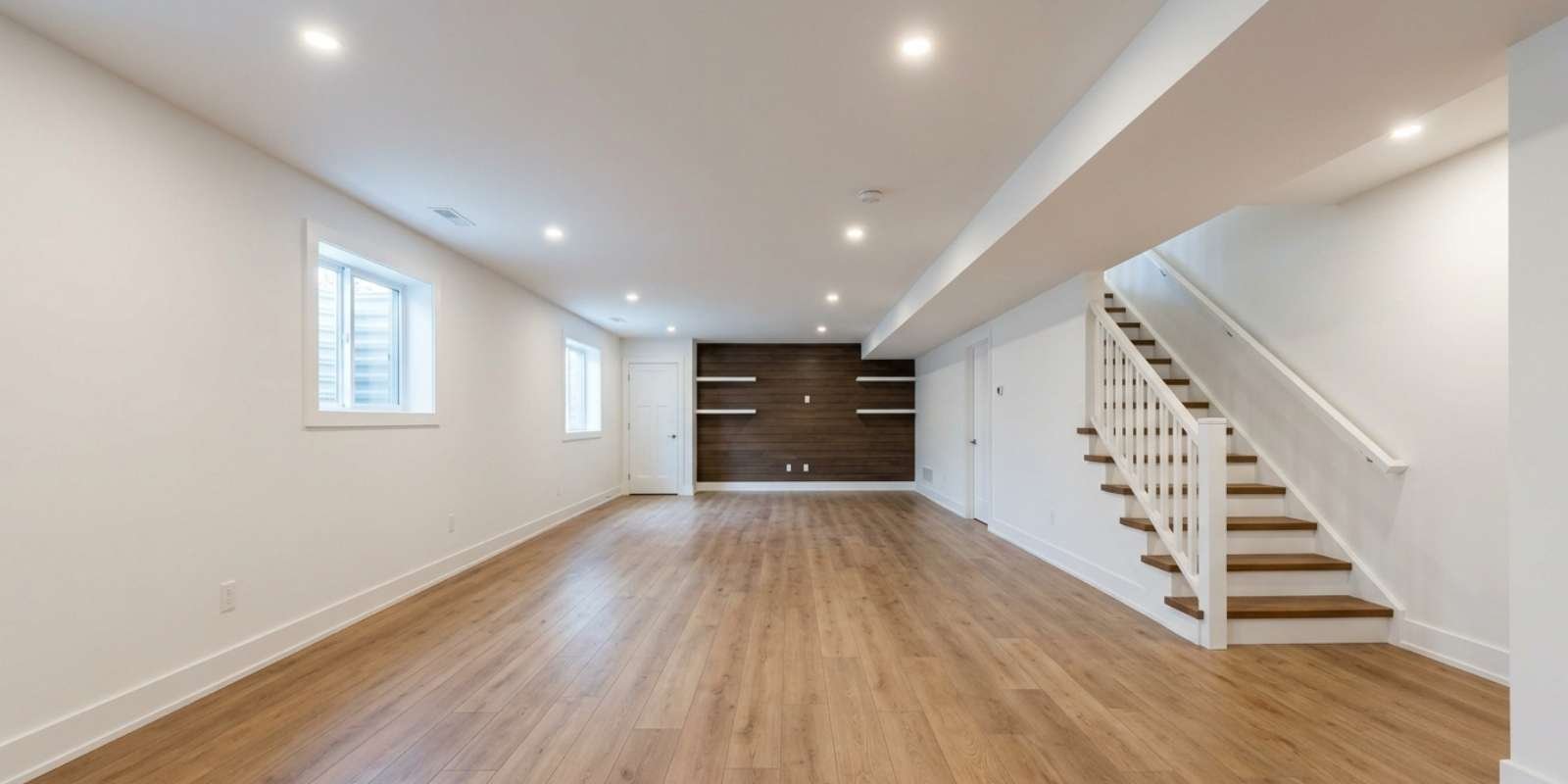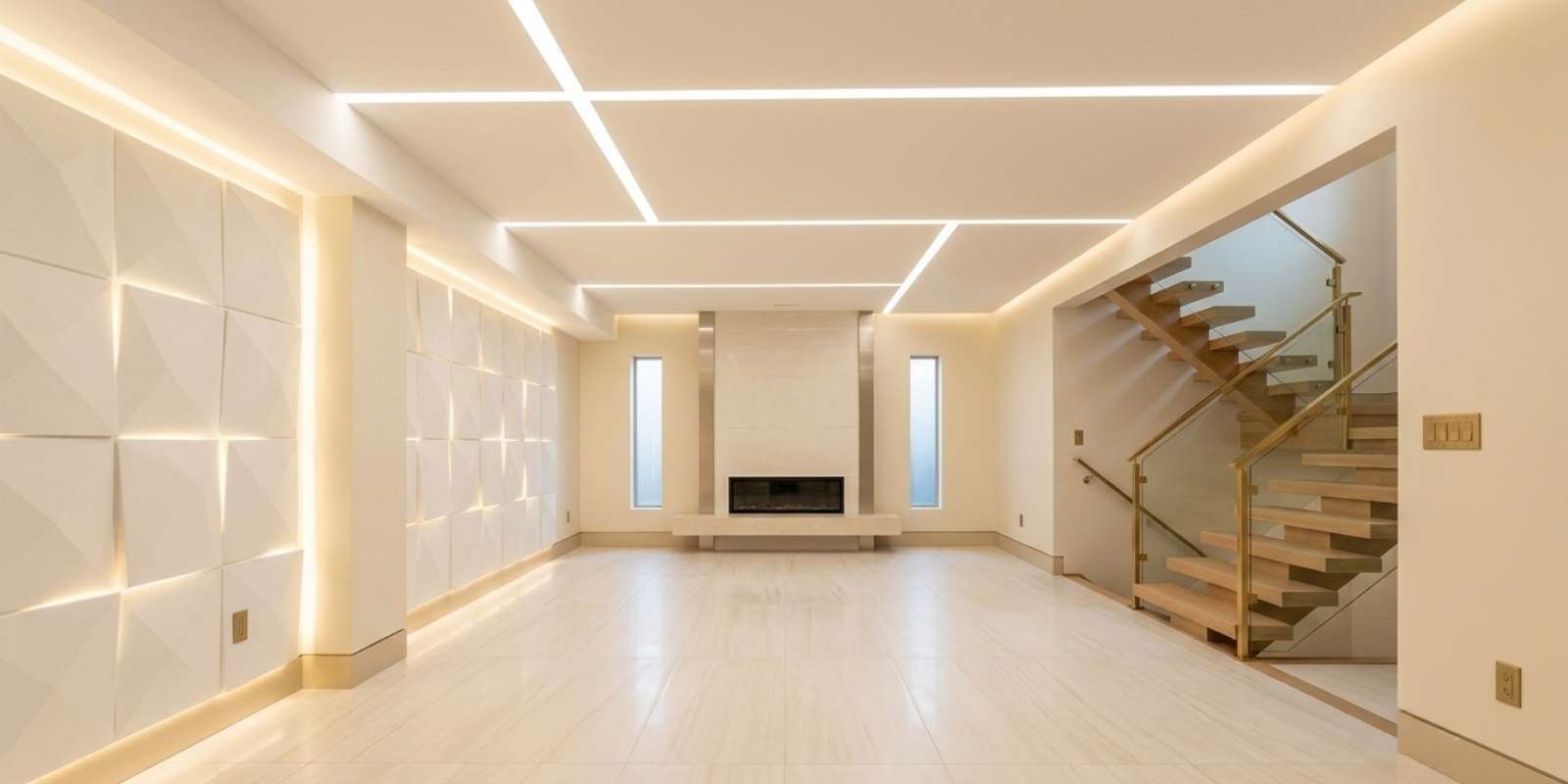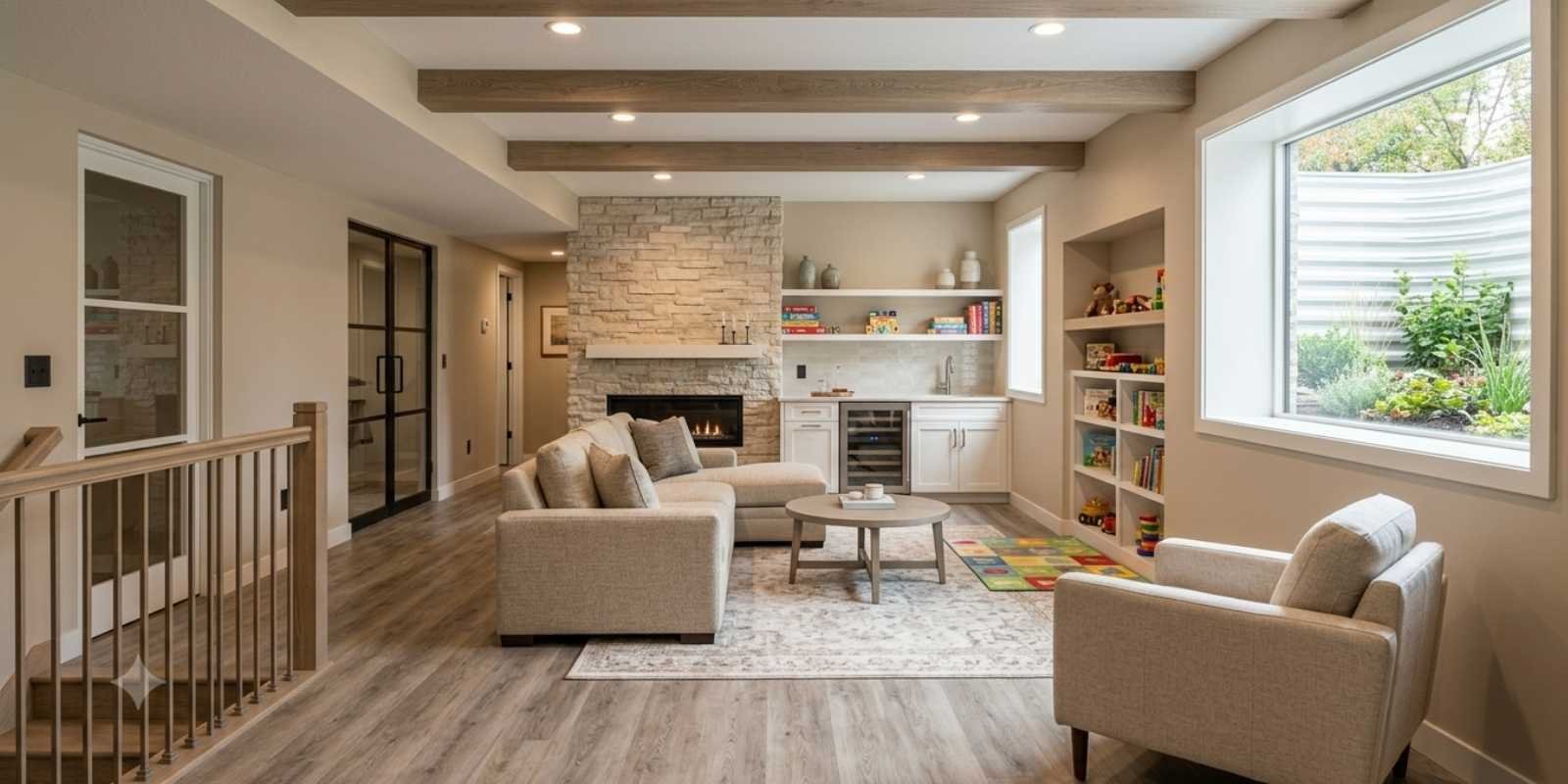

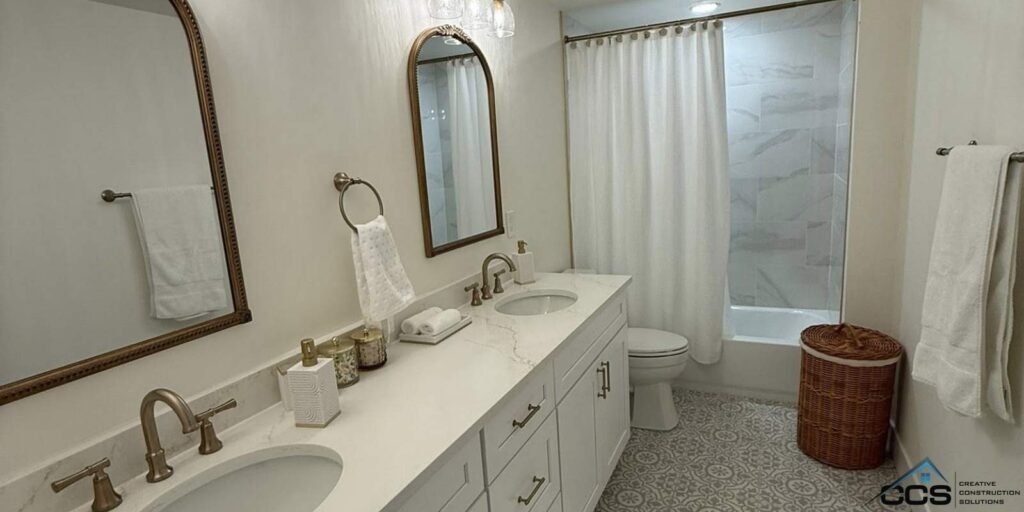
Cedar Hills is a small, well-established community tucked between American Fork and Pleasant Grove along the northern edge of Utah County. For homeowners, the basement finishing cost in Cedar Hills, Utah, is influenced by steady demand, mid-sized homes, and consistent build quality across the neighborhood. It has the feel of a tight-knit community with strong schools, family-oriented amenities, and housing that reflects steady growth over the past two to three decades.
Most Cedar Hills homes were built with full unfinished basements, making them ideal for expansion. Finishing that space adds livable square footage, increases home value, and is significantly more cost-effective than moving. This guide provides real 2026 pricing, explains key cost drivers, and outlines what Cedar Hills homeowners should know before starting a project.
Key Takeaways
- Most Cedar Hills homeowners spend $35,000–$60,000 to finish a basement in 2026.
- The typical cost runs $40–$60 per square foot, depending on finish level and features.
- Cedar Hills homes tend to be mid-sized and were built primarily from the late 1990s through the 2010s. Rough-in plumbing availability varies by build year.
- Every basement bedroom requires an egress window under Utah law, costing $3,000–$7,500 each.
- Radon testing is strongly recommended before finishing. Mitigation costs $800–$1,500 if needed.
- All basement finishing in Cedar Hills require permits.
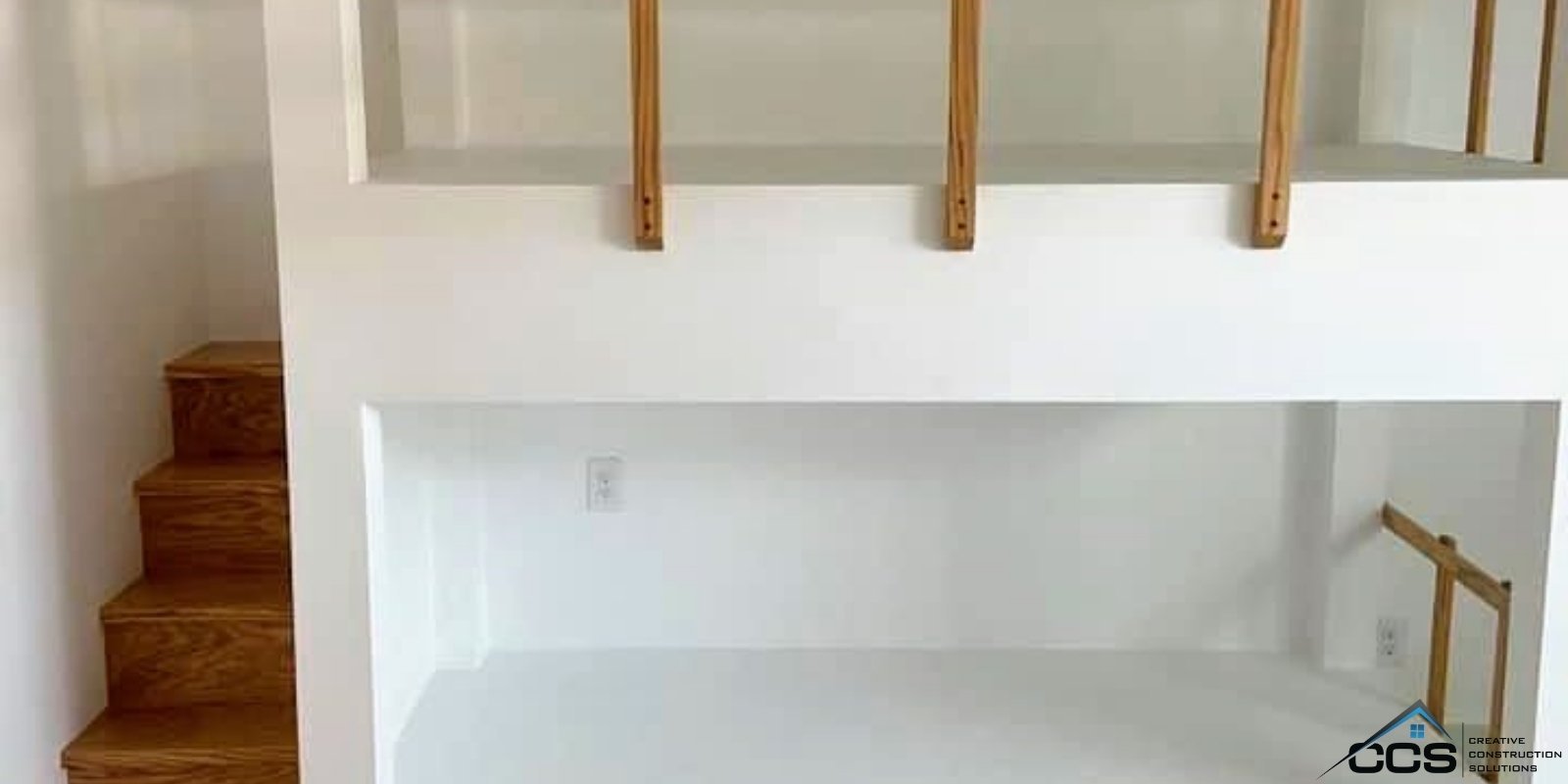
Basement Finishing Cost in Cedar Hills, Utah: 2026 Prices & Key Factors
Basement finishing cost in Cedar Hills, Utah, in 2026 depends on the home’s age, the basement’s condition, and the type of finishes selected. Newer homes typically cost less to finish, while older properties may require upgrades to plumbing, electrical systems, or ceilings. Understanding these factors helps homeowners plan a realistic budget before starting a project.
2026 Basement Finishing Cost Overview for Cedar Hills
Cedar Hills pricing is consistent with the surrounding Utah County market. Here is what homeowners are spending in 2026:
| FINISH LEVEL | COST PER SQ. FT. | TYPICAL TOTAL (1,000 SQ. FT.) | WHAT IS INCLUDED |
|---|---|---|---|
| Basic Finish | $30–$42 | $30,000–$42,000 | Framing, drywall, paint, flooring, basic lighting |
| Mid-Range Finish | $42–$58 | $42,000–$58,000 | Upgraded flooring, recessed lighting, one full bathroom |
| High-End Finish | $58–$80+ | $58,000–$80,000+ | Custom layout, full bathroom, wet bar, built-ins |
| ADU or Rental Suite | $70–$105+ | $70,000–$105,000+ | Full kitchen, separate entrance, rental-ready finishes |
These totals include labor, materials, and permits. The most common Cedar Hills project is a mid-range finish with one bathroom and two bedrooms, typically coming in between $42,000 and $56,000 for a 1,000–1,200 square foot basement.
What Makes Cedar Hills Different
Consistent, mid-sized housing stock
Cedar Hills does not have the extreme variation in home size and age you find in a city like American Fork. Most homes here are solid, mid-sized family homes built from the late 1990s through the early 2010s. That consistency is useful for planning a basement project because conditions are relatively predictable.
Homes built in Cedar Hills from the mid-2000s onward are likely to have rough-in plumbing in the basement floor. Homes built in the late 1990s or early 2000s may or may not. Check for capped pipes in your basement floor before budgeting your bathroom. If rough-ins are in place, your bathroom costs will be on the lower end of the range. If not, add $2,000–$5,000 for the concrete work.
Family use is the primary driver
Cedar Hills has a strong family culture. The most common basement projects here are practical ones: extra bedrooms, a homework room, a family room, or a playroom. Theater rooms and wet bars are popular additions too, but the core demand is for livable, functional family space. The mid-range finish tier is the right fit for most Cedar Hills projects.
Good access to contractors
Cedar Hills sits within easy reach of most Utah County basement finishing contractors like CCS of Utah. You have solid options here, but the best crews stay booked. Give yourself at least two to three months of lead time when looking for a contractor.
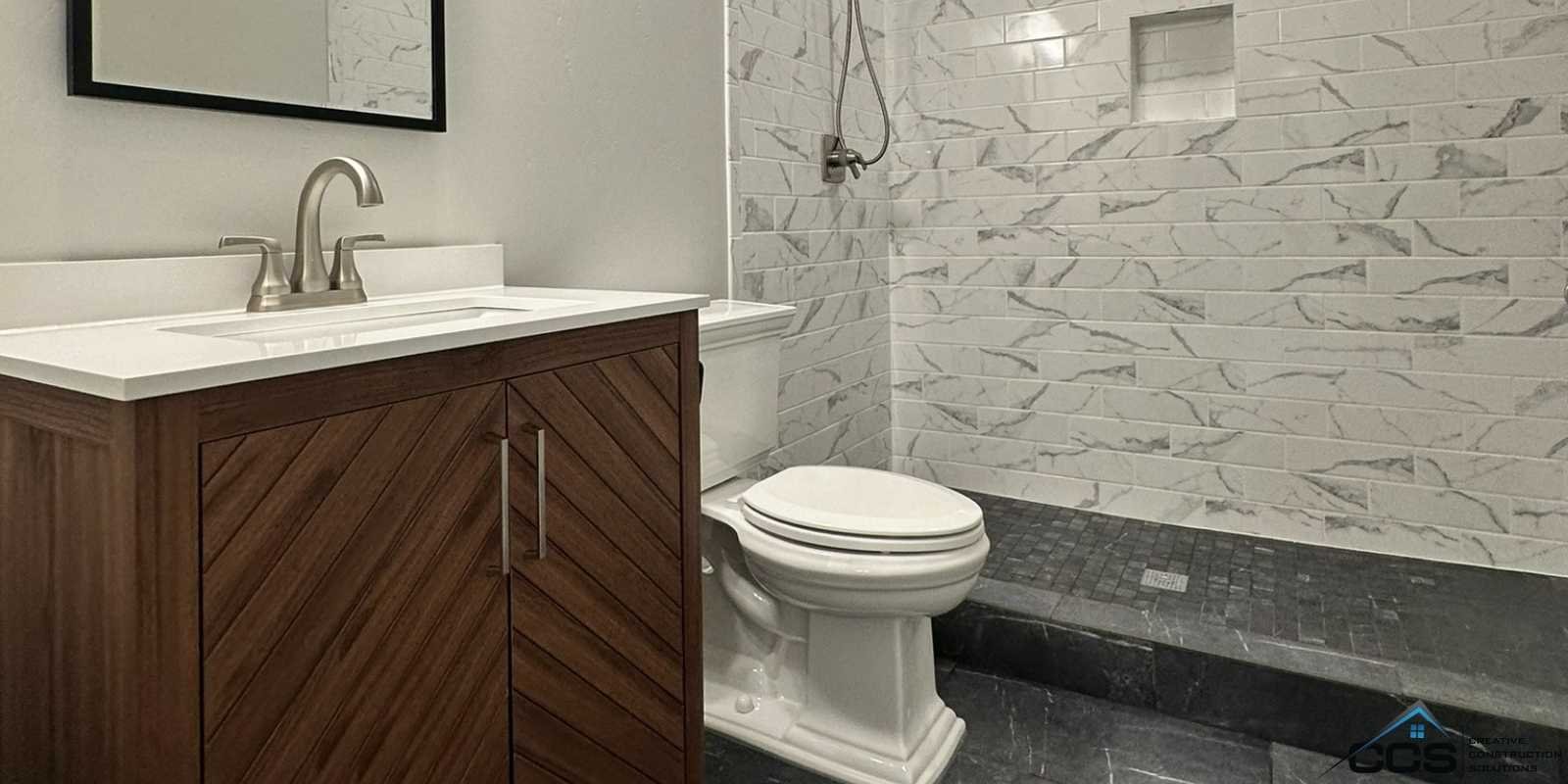
Room-by-Room Cost Breakdown
Open Living Area or Rec Room
An open rec room with framing, drywall, flooring, and basic lighting runs $25–$40 per square foot. A 600 square foot open rec room costs $15,000–$24,000.
Basement Bedroom
Every basement bedroom requires a code-compliant egress window. Without one, it is a bonus room, not a bedroom, and cannot be listed or appraised as such.
Egress window installation costs $3,000–$7,500 per window. A finished bedroom adds $8,000–$15,000 beyond the window for framing, drywall, flooring, a closet, a door, and required smoke and carbon monoxide detectors.
Basement Bathroom
A basic half bathroom adds $5,000–$9,000. A full bathroom with a shower runs $9,000–$18,000. If your home does not have rough-in plumbing, add $2,000–$5,000 for the concrete work.
Home Office
A finished office with proper lighting, outlets, and a door runs $10,000–$20,000.
Home Theater
A dedicated theater room with structured wiring, acoustic insulation, and lighting zones runs $15,000–$35,000.
Gym or Workout Room
A finished gym with rubber flooring and lighting runs $8,000–$18,000.
Wet Bar
A wet bar with a sink and countertop runs $5,000–$15,000.
What Affects Your Final Price
Build year and rough-in plumbing: Homes built after 2005 are more likely to have rough-ins. Check before budgeting.
Basement size: A 1,000 square foot mid-range finish runs $42,000–$58,000. A 1,300 square foot basement at the same level runs $55,000–$75,000.
Ceiling height: Utah code requires at least 7 feet of finished ceiling height. Most Cedar Hills homes meet this comfortably, but confirm before starting.
Flooring: LVP at $5–$10 per square foot is the most popular and cost-effective choice. Carpet runs $3–$7 per square foot.
Electrical panel: If your panel cannot handle a finished basement’s load, an upgrade costs $2,000–$5,000.
Prior unpermitted work: Some older Cedar Hills homes have partial basement finishes done without permits. These must be corrected before new work can proceed.
Radon Testing
Utah County has documented elevated radon levels in many areas. Test before finishing. Kits cost $10–$25 at any hardware store. If levels reach 4.0 picocuries per liter or higher, install a licensed mitigation system before walls close. Cost is $800–$1,500.
Permits and Building Code Requirements
Every basement finishing project in Cedar Hills requires permits. Permit fees for a standard project run $200–$700, with additional trade permit fees. Inspections occur at framing, rough electrical and plumbing, insulation, and final completion.
Your contractor pulls all permits under their own license. Unpermitted work creates problems at resale and may require walls to be torn out for inspection.
Learn more about basement finishing permits and inspections in Cedar Hills, UT.
Rental Units and ADUs
Cedar Hills allows basement ADUs with proper permits. A legal basement apartment in Cedar Hills can generate $1,100–$1,500 per month. A rental-ready finish costs $70,000–$105,000 and requires fire-rated separation, a separate entrance, full kitchen, bathroom, and egress windows. Learn more about basement ADU rules in Cedar Hills, UT.
How to Save Money
Check for rough-in plumbing before finalizing your bathroom budget. Get three detailed written quotes. Use mid-range finishes. Book your contractor two to three months in advance. You may reach CCS of Utah through the contact page. Set aside 15–20% as a contingency.
Frequently Asked Questions
Do I need a permit to finish my basement in Cedar Hills?
Yes. All basement finishing work requires permits. Your contractor manages this.
Does my Cedar Hills home have rough-in plumbing?
Homes built after roughly 2005 are more likely to have rough-ins. Check your basement floor for capped pipes near the center of the space.
Should I test for radon first?
Yes. Test before starting. If levels are elevated, install mitigation before the walls close.
Will a finished basement increase my home’s value in Cedar Hills?
Yes. Finished basements in Utah return 65–75% of their cost in added home value. In Cedar Hills’ stable, family-oriented market, a finished basement with bedrooms and a bathroom performs consistently well.